From Thousands to Millions: Scaling Psychedelic Therapy
As the year comes to close, I’m excited to share Healing Advocacy Fund’s End-of-Year Report for 2025. In it, we detail the progress across three states towards making safer, more accessible psychedelic therapy possible for everyone who can benefit.
That progress has been significant. More than 15,000 people have now accessed legal psilocybin care through state-regulated programs in Oregon and Colorado. This care is helping people heal from depression, anxiety, addiction, and trauma. It’s also providing results in the form of real-world research, offering hope where traditional treatments have too often fallen short. And in New Mexico, the state government, university researchers, and organizations like the Psychedelic Mental Health Access Alliance and Healing Advocacy Fund are collaborating to research, develop, and implement an insurance-reimbursable psilocybin therapy model for the future.
National approvals for psychedelics by the FDA may be on the horizon, but they will take time and may initially only reach a narrow patient base. Healing Advocacy is the only organization working for the thousands of people receiving legal, facilitated care today, and we are laying the groundwork to fight for a system that supports the integrated therapeutic model—not just the molecule—after FDA approval. Without this therapeutic framework, we risk a national “drug-only” program, leaving out the important preparation and integration phases and undermining the safety and effectiveness that we believe make psilocybin therapy transformative.
Our goal is not just that these state programs launch and run safely. We want them to succeed, scale, and become models for other states and a catalyst for the country. We do this so that thousands of people today - and millions in the future - get access to the care and potential for healing we’ve all been working toward.
Finally, none of this would be possible without your support for this work. With immense gratitude, I wish you and your loved ones a warm, peaceful, and happy holiday season.
Taylor West
Executive Director
COMMUNITY SPOTLIGHT
Chris Peskuski: Advocating for Tools That “Reach the Root of our Trauma”
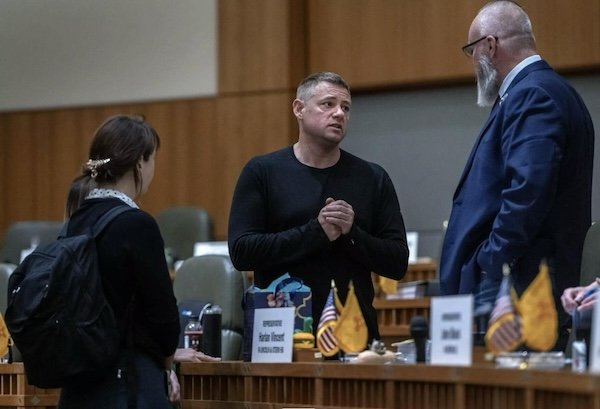
Photo courtesy of The Albuquerque Journal
Veteran Chris Peskuski worked to increase support for New Mexico’s successful psilocybin therapy bill in the New Mexico legislature earlier this year.
Chris Peskuski is a member of New Mexico’s newly appointed psilocybin advisory board, which is tasked with making critical recommendations to the Department of Health on the parameters of the program. An aspiring herbalist and advocate, he is also a Marine Corps combat veteran who served in Iraq and Afghanistan before beginning a decade-long career as a Hydrologic Technician with the U.S. Geological Survey. After leaving federal service, Chris shifted his focus toward community advocacy (including helping advocate for the legislative passage of New Mexico’s psychedelic therapy program) and holistic approaches to wellness. Chris has also collaborated with the Heroic Hearts Project, helping bridge the gap between veterans and access to psychedelic healing.
What first led you, as a veteran, to speak out publicly about the potential of psilocybin and other psychedelic therapies for healing?
After experiencing profound healing through psychedelics, I knew there was no way I could stay silent. So many veterans are struggling the way I once was, and if sharing my story can help them access healing here at home instead of having to go overseas, then it feels important to speak up. I didn’t set out to become an advocate, but the impact of these experiences made it impossible not to.
How has your own experience shaped your perspective on mental health care for veterans and trauma survivors?
My own healing showed me how limited traditional approaches can be for veterans and trauma survivors, and how transformative the right support can be. It made me realize that many of us aren’t “treatment-resistant”—we’ve just never been offered tools that actually reach the root of our trauma. That experience reshaped my perspective and strengthened my commitment to expanding safe, effective options for those still suffering.
What misconceptions about psychedelic therapy do you encounter most often? How do you respond when people express fear or skepticism?
The biggest misconception I hear is that mushrooms are a magic pill that instantly fixes everything. My own healing has been remarkable but it has not been effortless. The process has required real work and has included periods that were mentally, physically, emotionally, and spiritually challenging, even though those difficulties were not constant. When people express fear or skepticism, I explain that psychedelic therapy is not an easy shortcut but a structured healing process that relies on preparation, support, and a genuine commitment to doing the inner work.
Tell us about your work with the University of New Mexico pilot research study on psilocybin. Why is this pilot important for New Mexico’s program?
I am currently in training to serve as one of the facilitators for the veterans and first responders participating in UNM’s pilot study. I am excited about this project because it is one of the first studies in the country to explore psilocybin in a group setting and one of the first to examine the use of whole mushroom medicine. This pilot will give New Mexico real data and lived experience to guide the development of a safe and effective statewide program.
What gives you the most hope right now for broader cultural or policy change around healing, trauma, and mental health in New Mexico, or the country as a whole?
From what I understand, trauma was barely part of the mental health conversation thirty years ago, and even though I was not in therapy then, it is inspiring to see how far things have come. Today we have a growing range of tools, from ketamine, psilocybin, and ibogaine to therapies like Internal Family Systems and so many other options that help people address trauma in a real and meaningful way. What gives me the most hope is seeing the shift toward relational healing rather than a “take a pill and mask the symptoms” approach, and watching people be offered more pathways that truly support long term recovery.
UPDATES
Colorado: Up to Date Numbers on Natural Medicine Program Licensing
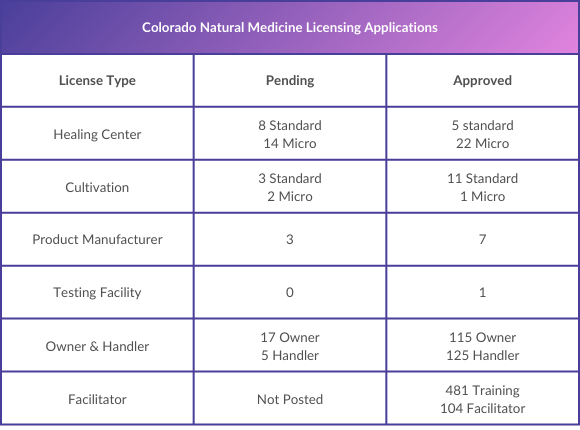
View HAF's Healing Center Directory for a list of licensed healing centers in Colorado. You can also search for facilitators using DORA's licensee lookup tool.
Oregon: Up to Date Numbers on Psilocybin Services Program Licensing

View the Oregon Psilocybin Services Data Dashboard to see the most up-to-date numbers.
Psychedelic Therapy Offers New Hope for Veterans
Since 9/11, more than four times as many U.S. service members have died by suicide than were killed in combat. Suicide rates among both veterans and active-duty personnel continue to rise—outpacing those of the general population, despite rates historically being lower among service members. The causes are complex and include exposure to trauma, post-traumatic stress, and a lack of effective treatment options.
Heroic Hearts Project and Omnia Group Ashland are partnering to expand access to psilocybin therapy for veterans to address trauma and other factors. Together, these organizations are raising funds to support therapeutic retreats designed specifically for veterans coping with the mental health impacts of military service.
Donations help cover costs such as individual and group preparation and integration sessions, airfare and transportation, lodging, and long-term alumni access to the Heroic Hearts community.
> Donate
Colorado Changes Facilitator Continuing Education Requirements
Colorado’s Department of Regulatory Agencies (which regulates licensed facilitators and facilitator training programs) recently updated its requirements for continuing education (CE) credits.
Previously, facilitators were required to complete 20 CE credits per year to maintain licensure. Under the new rule, facilitators must complete one CE credit for each month they hold an active license, totaling 12 credits for a full year of licensure.
Colorado’s rules are designed to provide flexibility, allowing licensees to fulfill CE requirements “through attendance at workshops, seminars, symposia, colloquia, invited speaker sessions, institutes, or scientific or professional programs.” Facilitators may also complete up to three credits by participating in bona fide facilitator peer support groups.
Continuing education requirements in both Colorado and Oregon play an important role in ensuring facilitators continuously deepen their knowledge and skills as they work with clients in regulated programs. This is particularly important in a developing field, where ongoing learning and collaboration help refine best practices and strengthen the quality of care.
HAF’s Continuing Education Directory provides an updated list of psilocybin therapy-related CE courses for review. To submit a CE course for inclusion, please use the form linked at the top of the directory.
New Mexico Advisory Board Convenes and Announces Accelerated Program Timeline
On December 5, the Advisory Board to New Mexico’s Medical Psilocybin Program convened for its first public meeting. The appointed Advisory Board members and their bios are available for review. During the meeting, the New Mexico Department of Health announced an accelerated program launch timeline, with the goal of making services available to patients by December 2026—one year earlier than the December 2027 statutory deadline established under SB 219.
The Advisory Board met again on December 12, when members established seven subcommittees focused on key aspects of program development, including patient safety, cultivation, equity, and accessibility. Each subcommittee will work to develop targeted recommendations for the Department of Health on core components of the medical psilocybin program.
Meeting dates for the subcommittees, along with opportunities to attend and volunteer, will be posted by the New Mexico Department of Health. The Advisory Board is scheduled to meet next on January 16, 2026, at 9:00 a.m. MT.
RESOURCES
HAF End of Year Report
The Healing Advocacy Fund has released our 2025 End-of-Year Report, highlighting the major progress in psychedelic therapy in Oregon, Colorado, and soon, New Mexico.
Early data from Oregon’s statewide reporting system and results from the first real‑world alcohol use disorder pilot study provide encouraging evidence of both safety and impact. This year, there were critical policy improvements to these programs, from Oregon’s Program Improvement Bill to Colorado’s expanded access rules and the appointment of an oversight board dedicated to advancing New Mexico’s medically integrated psilocybin model.
> Read the full report
IN THE NEWS
Portland Study Shows Psilocybin May Reverse Traumatic Brain Injury Effects
KPTV
A first-of-its-kind experiment conducted in Portland found that psilocybin can reverse the effects of traumatic brain injuries, according to researchers. MMA fighters from around the world came to Portland in April, and researchers took baseline measurements of their vitals and scanned their brains to see how they react to different stimuli.
The fighters were then given doses of psilocybin, commonly known as magic mushrooms. Over the last seven months, researchers continued to test the fighters’ cognitive functions. They say those who received psilocybin therapy saw notable improvements.
> Watch the full story
Opinion: Respecting Iboga Abroad Means Reforming Addiction Care in Colorado
Colorado Sun
“When my mother walked into my bedroom and sat on the edge of the bed, I’d been drifting in and out of opioid withdrawal, ducking out at night to score, letting days blur past under the covers. After years of struggle, she simply asked: “You haven’t left this bed in three days. What can we do?”
That question broke something open in me. I finally said what I’d been afraid to admit: I needed help, and I wanted to try a medicine I’d read about called ibogaine.”
> Read the full column
New Mexico to Accelerate Launch of Therapeutic Psilocybin Access
Filter
New Mexico health officials have announced plans to launch the state’s medical psilocybin therapy program by the end of December 2026—a full year ahead of the legislative deadline. This expedited timeline was revealed on December 5, during the public first meeting of the state’s Medical Psilocybin Advisory Board. The board was established by the passage of Senate Bill 219 earlier in 2025—legislation that made New Mexico the third state to authorize therapeutic psilocybin, after Oregon and Colorado.
> Read the full story