What Recent Polling Tells Us About Psychedelic Care and the Work Ahead
In our work across Oregon, Colorado and New Mexico, we understand that we are in a formative moment for the psychedelic field each and every day. State-regulated psychedelic therapy programs are new, highly visible, and evolving in real time. They are being judged not only by regulators and providers, but by the broader public, many of whom are encountering this concept for the first time, without much context for how these programs work nor the benefits they can provide.
A recent Ipsos/Psychedelic Alpha poll offers a glimpse of both the progress we’re making and the road we still have to travel. In encouraging news, 71% of the Americans polled held neutral-to-positive views about the use of psychedelics for medical and mental health reasons, and one in five people said their attitude toward psychedelics has become more positive over time. This is pretty remarkable. All of us who support psychedelic care can be proud that we’re breaking through decades of demonization and stigma and opening minds.
But the poll also shows that our work is not nearly done. A plurality (44%) of poll respondents said their views on psychedelic therapy are “neutral or mixed,” and 60% said they would not feel comfortable taking a psychedelic in any setting – at home, in a regulated program, or even under medical care.
Psychedelic therapy is not for everyone, and there’s nothing wrong with people making choices about their care. But for psychedelic care to have the impact at scale that we believe it can, it must be understood as credible, evidence-based, and effective. And it must be viewed as a responsible, mainstream option by the millions who can benefit from it, not just by those of us who are close to this work.
That’s why Healing Advocacy Fund prioritizes education and storytelling about state-regulated psychedelic therapy, helping people learn what it is, who it is for, and what it can do. This includes outreach to the psychedelic and health care ecosystems, and helping the wider public understand the benefits of safe and responsible psychedelic care. It also includes working with journalists to understand the opportunities and challenges of creating access for as many people as possible in today’s difficult regulatory environment.
We share stories as part of our work, not just for visibility but to build trust. When people encounter psychedelic therapy through relatable, human stories, it becomes easier to move past stigma and fear and towards informed understanding.
Healing Advocacy Fund exists to help ensure those moments add up to something durable: public confidence, political viability, and systems that can responsibly serve people who need care. With your support, we can continue stewarding the narrative of this emerging field so that early progress is understood, challenges are contextualized, and the promise of regulated psychedelic therapy is given the chance to fully take root.
Thank you for being part of this work at such a pivotal time.
Taylor West
Executive Director
COMMUNITY SPOTLIGHT
Gabe Charalambides: Building the Next Generation of Psychedelic Therapy
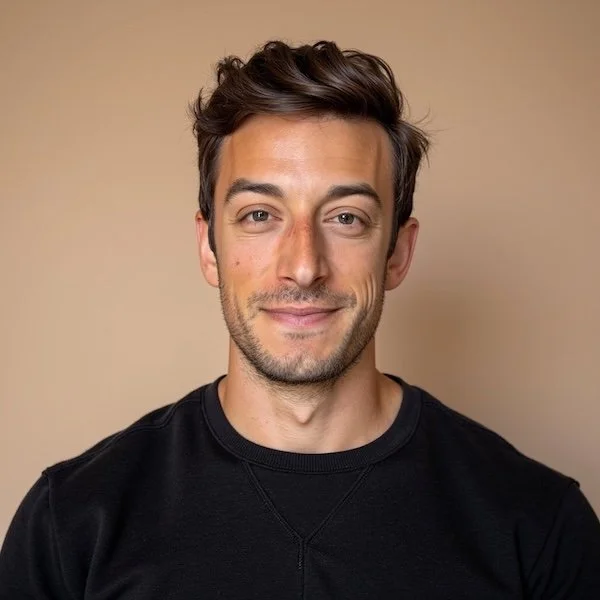
Odyssey is a group of psychedelic facilitators that hosts group and individual psilocybin retreats. It was founded by Gabe Charalambides, a Stanford-trained aerospace engineer with an interest in Buddhism and meditation, and whose own experience using psychedelics to manage anxiety reshaped his understanding of mental health and well-being.
When searching for his first psychedelic therapy experience, Gabe struggled to find a psilocybin therapy environment that modeled the gold-standard format of psilocybin clinical trials. With a background in engineering and research, he sought a setting that honored the therapeutic potential of psychedelics while remaining grounded in science—an approach he believes can attract new clients seeking care across state-regulated programs.
Odyssey opened in Oregon in 2023 as the first legal psilocybin retreat in U.S. history, offering a safe, supportive, and evidence-based environment for people to explore the transformative healing potential of psychedelic therapy. Today, Odyssey offers private psilocybin therapy services and multi-day psilocybin retreats in both Oregon and Colorado
Your journey from aerospace engineering to founding Odyssey is unique. How have your personal experiences with anxiety and psychedelic-assisted healing shaped your vision for Odyssey?
My vision for Odyssey was inspired by my search for my first high-dose guided experience. To be honest, I was scared. It was hard to get a clear sense of the risks, and I didn’t want to feel like I was gambling with my mind. As someone with an engineering background and who is generally averse to new-age spirituality, finding a place that was partnering with a research institution is what helped me feel safe enough to proceed. I realized I wasn’t alone in this. I suspected that a large portion of Americans who would become curious about psychedelics over the next decade would fall into a similar bucket.
I knew I wanted Odyssey to be a place where this next generation of psychedelic-curious individuals would feel safe and comfortable, and where these truly incredible experiences could feel approachable. A heuristic I’ve come back to again and again is simple: would my mom feel safe in this setting?
How has your engineering and research background informed how you design Odyssey’s programs and retreats?
First we focus on the intentionality we put into program design, including exactly how and when information is delivered. I view our core programs as roughly two-month journeys, and I think there’s a real opportunity to be thoughtful about what information someone needs at each stage, and how best to communicate it.
Second, we do our best to be careful with language. We try to convey information in a neutral, non-dogmatic tone, so we’re not implicitly or explicitly pushing a particular worldview. Intellectual humility matters a lot to us, and we’re careful not to overpromise what these experiences are or can do. We also try to follow science and clinical-trial-informed protocols where appropriate.
Lastly, I’m proud that we’re launching an IRB-approved research study this month, with the goal of studying hundreds, and hopefully thousands, of individuals in the coming years.
In your work building one of the first state-regulated psilocybin facilitator groups in the U.S., what have been the most significant challenges and lessons learned?
There’s no shortage of challenges. The first is simply navigating rules and regulations. Our initial vision was to offer retreats, and doing that within state guidelines required a lot of experimentation before we found an operational model that worked.
Another major challenge is ensuring consistently high-quality experiences. There’s enormous variance in who pursues this work and in what can arise during a session. Doing this safely and thoughtfully, outside the medical system, while keeping costs reasonable, is genuinely difficult.
One of the biggest lessons has been the importance of staying nimble. This is a rapidly evolving landscape, and our willingness to adapt has allowed our model to evolve significantly from our original vision.
From your vantage point, what policy, training, or infrastructure investments are most needed right now to support equitable access?
Insurance coverage is essential for equitable access at scale. Doing this work well requires a significant amount of human time and care, and without coverage it’s hard to see costs coming down enough to make it broadly accessible out of pocket.
Can you share an example of a powerful moment or story from someone who participated in an Odyssey experience that illustrates the potential impact of psilocybin therapy?
Rather than a single story, I’d love to share a few words directly from participants who’ve given us permission to share their testimonials. These reflect personal, subjective experiences, but they capture the kinds of impacts people often describe feeling like they received a new lease on life, reconnecting with and loving themselves and experiencing deep personal healing:
“I just want to reiterate what I said about this extended weekend being the most meaningful days of my life. ‘Thank you’ will never seem like enough.”
“This experience was the first instance in which I was truly able to exist without any of the fears I've carried throughout my entire life. I experienced consciousness in the present moment, uncolored by any neuroticism or self-criticism…. I feel like I'm now the person I've always been but didn't realize it until now.”
“My time at the retreat was the most profound and healing experience of my life. I will be forever grateful to the wonderful facilitators and fellow participants who were an integral part of my healing journey.”
Odyssey aims to balance scientific credibility with accessibility for clients. How do you think we can advance public understanding of psilocybin-assisted therapy in ways that transcend stereotypes and engage more people?
When many people think of psychedelics, they still think of the 1970s: hippie culture, and what some describe as “woo-woo.” I find this frustrating, because I think it can give a sense of ‘that isn’t for me’ for many, and can mischaracterize what these experiences are.
At its core, the healing that can happen here is deeply human: releasing long-held trauma, processing the loss of a loved one, reconnecting with yourself, learning to love yourself, clarifying what matters most in your life. None of this is esoteric or requires adopting a new worldview.
I believe a firm grounding in science is essential if psychedelic therapy is going to reach a broader audience. We need to talk about these experiences in a way that feels closer to how we talk about the rest of healthcare, while still maintaining reverence for just how meaningful they can be.
UPDATES
Colorado: Up to Date Numbers on Natural Medicine Program Licensing
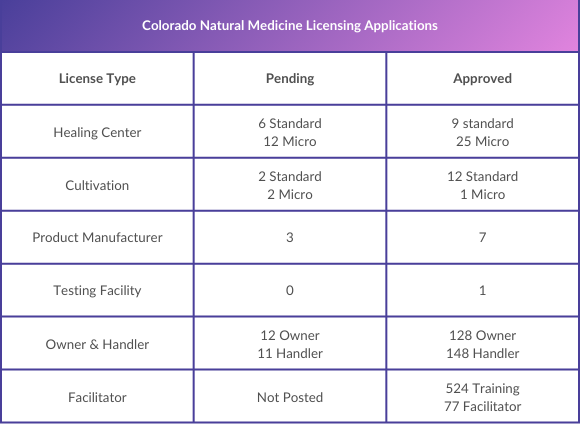
View HAF's Healing Center Directory for a list of licensed healing centers in Colorado. You can also search for facilitators using DORA's licensee lookup tool.
Oregon: Up to Date Numbers on Psilocybin Services Program Licensing
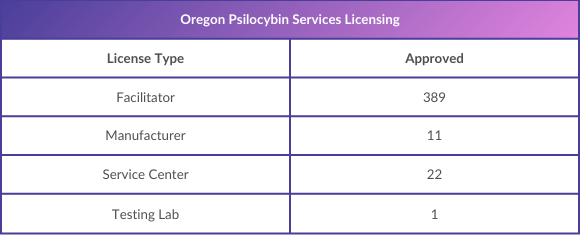
View the Oregon Psilocybin Services Data Dashboard to see the most up-to-date numbers.
Storytelling in Video Form
Video storytelling is one of the most powerful ways we connect across differences—in age, background, geography, and lived experience. Words alone can be powerful, but in today’s digital media environment, video stories can bring an emotional texture to storytelling that helps people see themselves in psychedelic therapy.
The videos below take two differing approaches to visual storytelling about psychedelic therapy:
Neuroplasticity and Psychedelic Therapy: How to Rewire Your Brain
Oregon’s Bendable Therapy recently hosted Medicinal Media and Unlikely Collaborators to help produce a video on psychedelics and neuroplasticity. Professor of Neurology Dr Jennifer Mitchell (UCSF), psilocybin-assisted therapy facilitator River Jenkins, and client JJ explore how a lifetime of treatment-resistant depression can shape the brain’s pathways.
> Watch the video
3 Grandmas Trip on Magic Mushrooms for the First Time
This lighthearted video produced in collaboration with Oregon’s Inner Trek service center and two psilocybin therapy facilitators (Rose Engein and Lisa Snyder) is pretty much what the title describes. It has been viewed almost 3.5 million times, and is likely exposing people for the first time to the existence of Oregon’s state-regulated program—and perhaps exposing them for the first time to the very idea of state-regulated psilocybin therapy altogether.
> Watch the video
New Mexico Legislative Session Underway
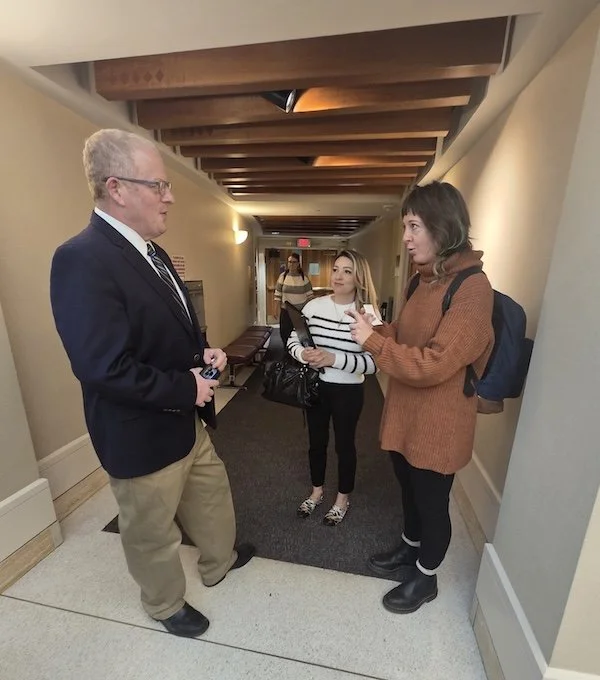
HAF New Mexico Director of Strategic Support Denali Wilson (right), and Veteran Advocate Crystal Romero (middle) meet with Senator Jeff Steinborn (left) to discuss 2026 legislative priorities in support of equity and research in New Mexico’s Medical Psilocybin Program.
The New Mexico legislative session began on January 20 and will run through February 19. We are committed to supporting the success of state programs through critical legislative advocacy in support of four key needs, for new funding appropriations to the Treatment Equity Fund and to expand psychedelic-assisted palliative care research at the University of New Mexico and an extension of previously appropriated funds to the Department of Health and University of New Mexico for the programmatic and research projects under the Medical Psilocybin Program.
We are excited to share that we have already come close to securing all legislative funding goals for the medical psilocybin program, and have even exceeded the funding goal for the Treatment Equity Fund! We want to express gratitude to the behavioral health providers and community advocates who supported these requests and to the lawmakers who have already supported these efforts, with a special thanks to Senators Jeff Steinborn (D), Nicole Tobaissen (R), Jay Block (R), and Representative Stefani Lord (R) for committing portions of their annual individual budget allotments to the Medical Psilocybin Treatment Equity Fund and Senator Martin Hickey (D) for committing funds to expand psychedelic-assisted palliative research at the University of New Mexico.
We are inviting continued support from New Mexicans who care about the success of the state’s Medical Psilocybin Program to help secure the additional funding needed this year to pursue expanded psychedelics research at UNM.
Advocacy organizations and behavioral health provider agencies willing to support this important request can sign a community letter requesting the funds.
New Mexico Advisory Board Continues to Take Shape
Seven members of New Mexico Medical Psilocybin Advisory Board have been appointed and the group is meeting regularly to develop recommendations that will shape the future of the state’s program (applications remain open for the final two positions). Seven subcommittees have also been formed, each chaired by an advisory board member. Participation in subcommittee meetings is open to anyone who wishes to attend and engage, though voting in most meetings is limited to New Mexico residents. To sign up to receive updates and advisory board and subcommittee meeting notices and registration information, you can enroll in the Department of Health’s e-news system and select the “Medical Psilocybin Program” email list.
Early subcommittee discussions have reflected thoughtful, community-driven engagement on topics ranging from which psilocybin-containing mushroom species should be authorized, to whether end-of-life care may extend to caretakers and loved ones. Recordings and written materials from each meeting are available on the New Mexico Department of Health’s advisory board landing page.
It is expected that draft cultivation and testing regulations will be considered by the Propagation Subcommittee in mid-February and that draft training and education regulations will be considered by the Training and Education Subcommittee in mid-March. Draft regulations, discussion meeting information, and guidelines for providing public input on the draft regulations will also be posted on the Department of Health website.
Healing Advocacy Fund will remain closely engaged in the New Mexico regulatory process moving forward. Providers, advocates, and other stakeholders in New Mexico can receive monthly updates on the process by registering for our New Mexico newsletter.
EVENTS
Feb 13th Webinar: Supportive Touch in Psychedelic-Assisted Therapy: Best Practices and Ethical Guidelines
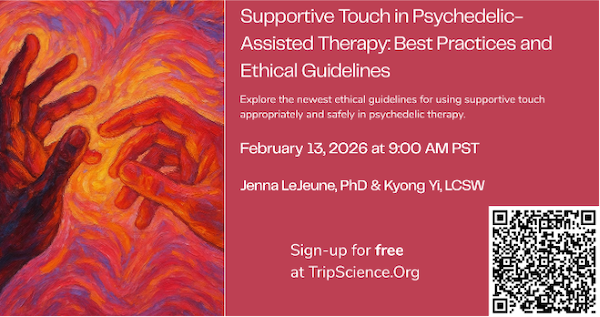
As facilitated psychedelic work continues to evolve, clear standards for safe and appropriate touch have become increasingly important. February’s TRIPS seminar, led by Jenna LeJeune, PhD, and Kyong Yi, LCSW, will focus on newly developed ethical and professional guidelines for the use of supportive touch in psychedelic-assisted therapy.
In this free webinar, scheduled for February 13 at 9:00 a.m. Pacific Time, the presenters will review emerging recommendations on when and how touch may be incorporated in psychedelic contexts, including suggested protocols, best practices, and current regulations within state-regulated psychedelic programs. They will also discuss how to engage clients in transparent, values-based conversations about touch, as well as the significant ethical considerations that arise when individuals are in non-ordinary states of consciousness.
This session is designed for therapists, facilitators, and trainees seeking to stay aligned with best practices and develop a grounded, ethically informed approach to the use of touch in psychedelic care.
> Register for free
RESOURCES
Client Education Guides Help Clients Access Psilocybin Therapy Safely
Healing Advocacy Fund has updated our Client Education Guide for Oregon and released a companion guide for Colorado to help adults 21 and over understand how to access psilocybin therapy safely and responsibly.
These guides are designed to meet people where they are. They explain how each state’s program works, what psilocybin therapy can—and cannot—offer, and how to think through important considerations such as mental health history, medical safety, and personal readiness. Readers will also find practical, step-by-step guidance on how to identify and evaluate licensed service centers and facilitators within each state.
People explore psilocybin therapy for many reasons, including mental health challenges, end-of-life care, or personal growth. Regardless of motivation, informed decision-making is a cornerstone of safe, ethical care. These resources provide evidence-informed context to help individuals assess whether this approach is right for them.
Explore the Oregon and Colorado guides and share them with others who may be seeking accurate, grounded information about legal psilocybin services. Supporting informed choices is one of the most important ways we build trust and strengthen access across these emerging programs.
> Read the Oregon and Colorado guides
HAF End of Year Report
The Healing Advocacy Fund has released our 2025 End-of-Year Report, highlighting the major progress in psychedelic therapy in Oregon, Colorado, and soon, New Mexico.
Early data from Oregon’s statewide reporting system and results from the first real‑world alcohol use disorder pilot study provide encouraging evidence of both safety and impact. This year, there were critical policy improvements to these programs, from Oregon’s Program Improvement Bill to Colorado’s expanded access rules and the appointment of an oversight board dedicated to advancing New Mexico’s medically integrated psilocybin model.
> Read the full report
IN THE NEWS
N.J. Just Passed a ‘Magic Mushroom’ Bill That Could Change Mental Health Treatment Forever
New Jersey Star-Ledger
State lawmakers are moving forward with a pilot program that would allow hallucinogenic magic mushrooms to be used for behavioral health treatment options across New Jersey.
The bill, known as the Psilocybin Behavioral Health Access and Services Act, or S2283, would authorize licensed facilities in the state to administer medical sessions for adults 21 and older. The measure would also appropriate $6 million for the program.
Psychedelics in Practice: What the State Programs Are Teaching Us
Psychedelic Alpha
While the FDA captures headlines, Oregon, Colorado, and New Mexico are quietly proving what works in real-world psychedelic therapy and shaping the future of care. Much of the psychedelic sector spent 2025 riding the FDA rollercoaster, tracking trial timelines, parsing regulatory signals, and speculating about approval pathways. Meanwhile, with far less attention, state-regulated psychedelic therapy programs have been quietly revolutionizing the field.
Right now, these programs are doing what no federal pathway yet has—delivering legal, regulated, therapeutic psychedelic care at scale.
> Read the full story
’Shrooms Lead the Pack in Psychedelic Medicine, but Rollout Is Bumpy
The New York Times
“Between research results and policy changes, it’s a watershed moment for psychedelic health care, and psilocybin is the star,” said Nate Howard, director of operations at InnerTrek, a psilocybin clinic in Portland, Ore. Mr. Howard was a driving force behind a successful ballot measure in 2023 that created Oregon’s psilocybin program.
State lawmakers, however, are not waiting for regulators in the nation’s capital.
Last year, New Mexico joined Colorado and Oregon in offering legal psilocybin therapy to adults. Lawmakers in a dozen states, including North Carolina, Maryland, Georgia and California, are considering easing restrictions on the drug using public funds to research the potential benefits of psilocybin therapy.
> Read the full story