How real world data is shaping the future of psychedelic therapy
In market research about psychedelic therapy conducted by Healing Advocacy Fund among Oregonians living with depression, anxiety, trauma, and other mental health conditions, one response stood out: “My therapist / psychiatrist / doctor hasn’t suggested this as an option.”
That insight from survey respondents underscores a central challenge, and an opportunity. If state-regulated psilocybin therapy is to reach people who stand to benefit, it must be understood, trusted, and responsibly integrated within broader healthcare systems. That’s why Healing Advocacy is focused on building bridges between licensed healthcare providers and state-regulated programs. Stronger alignment between the two will increase awareness, improve safety and outcomes, and help normalize this therapy within medical and behavioral health settings.
Trust, however, is built on evidence. To earn the confidence of clinicians and policymakers, we must demonstrate safety, efficacy, and reproducibility through rigorous data collection and transparent research. Encouragingly, that work is well underway in Oregon and Colorado.
Data from Oregon
Early Senate Bill 303 data collection is providing the first real-world view of how a regulated psilocybin services system operates at scale. Thousands of clients have now accessed services through licensed centers. Reported adverse reactions remain rare, and participants are seeking services for a wide range of reasons—from depression and anxiety to personal growth and wellness. These early signals are important. They suggest that a carefully regulated system can function responsibly while serving diverse needs.
Data from Colorado
Colorado has embedded data collection directly into its statutory framework. The state’s public health agency is tasked with gathering and publishing anonymized information on health impacts, safety events, and consumer protections to inform continuous evaluation and policymaking. While the program is still in its early stages and will be implemented later this year, this commitment to structured oversight will expand the evidence base around real-world service delivery and regulatory outcomes.
Alcohol Use Study
Last year, Healing Advocacy Fund partnered with People Science and InnerTrek to launch an observational study in Oregon examining psilocybin therapy for individuals struggling with alcohol use. Data analysis is ongoing, but this effort represents an important evolution for the field—moving beyond promising clinical trials into real-world research within state-regulated programs. Watch this newsletter for results from the study soon.
OPEN Research Initiative
A federally funded initiative at Oregon Health & Science University, led by the Open Psychedelic Evaluation Nexus (OPEN), is also advancing critical evidence. Supported by a five-year, $3.3 million award from the National Institute on Drug Abuse, this study will be the first of its kind to assess the safety, implementation, and outcomes of state-regulated psilocybin services delivered in community settings outside traditional clinical trials.
Taken together, these efforts signal that state-regulated psychedelic therapy is not operating in a vacuum. It is being studied, evaluated, and refined in real time. By grounding this emerging field in data and transparency, we can strengthen credibility, protect participants, and ensure that these programs evolve safely and at scale. There are millions of Americans that are depending upon our ability to do so.
Thank you for supporting this work—and for helping us build the evidence base that will shape the future of regulated psychedelic care.
Taylor West
Executive Director
UPDATES
Colorado: Up to Date Numbers on Natural Medicine Program Licensing
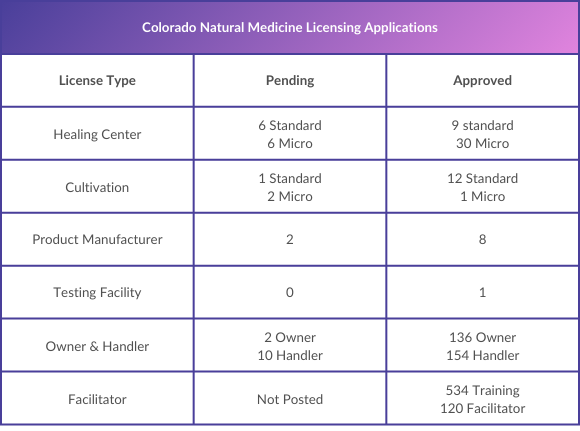
View HAF's Healing Center Directory for a list of licensed healing centers in Colorado. You can also search for facilitators using DORA's licensee lookup tool.
Oregon: Up to Date Numbers on Psilocybin Services Program Licensing

View the Oregon Psilocybin Services Data Dashboard to see the most up-to-date numbers.
Colorado Considers Changes to the State Program
For the first time since Colorado’s psilocybin therapy program launched in 2025, state regulators are considering changes to the program rules. The Colorado Department of Revenue (DOR) is seeking feedback on proposed changes to their rules for businesses (healing centers, cultivators, manufacturers and testing labs). The proposed changes make some improvements – including streamlining a few record-keeping requirements, eliminating licensing fees for testing labs in 2026, and allowing licensed labs to engage in research and development. However, significant work remains to reduce costs and regulatory burden for natural medicine businesses in Colorado to ensure sustainability and viability of the program. This means unwinding unnecessary regulations wherever possible. The high costs of licensure are ultimately passed on to those seeking access to healing, deepening concerns around program equity.
Additionally, regulators do not appear to have included a requested change that licensed testing labs be able to co-locate and share equipment with unlicensed labs – a change that many consider necessary for additional labs to participate in the regulated program.
Stakeholders are invited to provide feedback on the proposed changes by submitting written comments.
Colorado Begins Building System to Measure Real-World Outcomes
Colorado has begun building a first-of-its-kind database to track real-world outcomes from psilocybin therapy within its state-regulated program. The Colorado Department of Public Health and Environment (CDPHE) plans to house the database within the existing Colorado Health Informatics Data System. All data will be de-identified and anonymous to protect client privacy.
The system will integrate three core data streams: clinical outcomes, regulatory compliance, and safety events. A public-facing dashboard will display aggregate information, and qualified researchers will be able to request custom data exports at little to no cost, enabling more nuanced analysis. CDPHE plans to pilot the system with a small group of healing centers beginning in July, with a statewide launch anticipated in October 2026.
CDPHE representatives presented an update to the Natural Medicine Advisory Board this month and convened a national group of respected researchers to inform the project’s design. The Healing Advocacy Fund is working to ensure the system strikes the right balance—supporting unprecedented learning about psilocybin therapy in real-world settings while protecting client privacy and streamlining data collection.
New Mexico: Legislative Victories, Research, and Advisory Board Updates
New Mexico’s legislature has passed the state’s budget, which allocates $630,000 for the Medical Psilocybin Act Treatment Equity Fund and $300,000 to expand psychedelic end-of-life research at the University of New Mexico (UNM). The governor has until March 11 to sign the budget into law.
Full funding of the Treatment Equity Fund marks the beginning of a bold new chapter in state-led health innovation. As the nation’s first medically integrated psilocybin program, New Mexico is setting a model the rest of the country will watch closely—particularly around affordability, access, and equity. With the psychedelic therapy program set to launch on an accelerated timeline, the Legislature’s decision to fully fund the Equity Fund sends a clear message: this new model is intended to be accessible to the communities it is designed to serve.
The investment in expanded psychedelic end-of-life research at University of New Mexico is equally significant. This research will explore how to integrate family caregivers into psilocybin-assisted therapy, recognizing the central role families play in end-of-life care. Because end-of-life diagnosis qualifies patients under the state program, this work will directly inform implementation and help ensure that compassionate, evidence-based practices are embedded from the outset.
In addition, the UNM Group Psilocybin-Assisted Therapy study has received approval from the U.S. Food and Drug Administration and the university for its innovative model. The study includes community engagement, the use of whole psilocybin mushrooms in chocolate form, group therapy with peer facilitators, and extended integration support. Developed in collaboration with the Psychedelic Mental Health Access Alliance, the model aligns with the state-regulated program’s emphasis on equity and access. Screening is expected to begin in April, with the first group of veterans and first responders anticipated to start by June.
Meanwhile, subcommittees of the Medical Psilocybin Advisory Board continues to meet, maintaining steady progress as the program takes shape. The Propagation Subcommittee has drafted proposed regulations addressing cultivation, testing, and labeling of psilocybin; these recommendations will be considered by the full Advisory Board before moving to the Department of Health for formal rulemaking.
To receive updates on the regulatory process and program implementation, we encourage you to register for our New Mexico newsletter.
Early Results Show Oregon’s Psilocybin Program Offers Promise for Alcohol Challenges
This month at the 6th Annual Psychedelic Therapeutics and Drug Development Conference in New Orleans, People Science and Healing Advocacy Fund will present preliminary findings from a study examining psilocybin therapy’s impact on people struggling with alcohol use. Dr. Noah Craft, Co-Founder and Co-CEO of People Science, alongside Taylor West, Executive Director of Healing Advocacy Fund, will share six-month data from this pioneering real-world pilot study conducted within Oregon’s state-regulated psilocybin program.
Researchers followed 20 participants receiving care at a licensed Oregon service center (research partner InnerTrek). Participants completed preparation, one individual psilocybin administration session, one group administration session, and received both individual and group integration support after administration. Trained facilitators determined dosing in accordance with service center guidelines.
Researchers tracked alcohol consumption, mood, anxiety, quality of life, and adverse events at baseline and for six months following the psilocybin sessions. Final, peer-reviewed results are expected to be published before the end of the year.
COMMUNITY SPOTLIGHT
Abbie Rosner: Finding Purpose and Meaning Through Psychedelics in Later Life
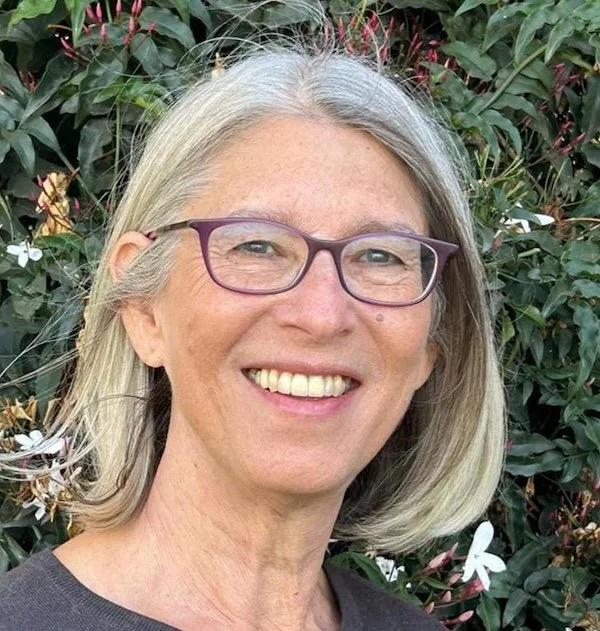
Abbie Rosner is a writer exploring how older adults are discovering, and rediscovering, the drugs of their youth. Her forthcoming book, Psychedelics and the Counterculture of Aging (Park Street Press), will be published this summer. She also writes a Substack, ELDEREVOLUTION Newsletter on Psychedelics in Older Age. Abbie currently lives in Washington, DC.
What inspired you to explore the intersection of aging and psychedelic experience, and ultimately to write your book?
As a writer who came of age in the 1970s, I’m fascinated by the very different ways we aging baby boomers are relating to the drugs of our youth. Particularly when it comes to psychedelics, while we may have been reckless back in the day, a growing number of older adults are exploring these medicines with maturity and intention, in ways that are transforming their experience of aging. When I set out to write this book, I wanted to see if older adults doing psychedelics is actually a thing. Midway into writing, I realized I was onto something very important. And I was excited to explore and share that with the world.
You describe later adulthood as a period rich with potential for healing, self-discovery, and spiritual growth. How and why do you think psychedelics can change what aging can look like today?
As the boomers enter older age, they are finding society’s ageist, death-phobic messages don’t suit their sensibilities. At the same time, a conscious aging movement is now emerging that emphasizes older age as a time for growth, meaning-making, spiritual deepening, activism and closure. Because psychedelics can so beautifully support these processes, I believe that their growing acceptance and legal availability will amplify this larger trend.
What are the motivations of older people who seek out psychedelic experiences? Do these motivations differ from people at different ages and stages in life?
In older age, people often ask themselves how they want to live the time that remains. Healing and authenticity become priorities. There is a desire for insights into one’s personal narratives but also into life writ large. Older adults who seek out psychedelic experiences have done the research, made their risk/benefit assessments, and decided to take the plunge. As many of the people I interviewed for my book expressed, it was now or never. And there wasn’t a minute to waste.
As state-regulated psychedelic therapy programs begin to take shape, what opportunities—and potential blind spots—do you see in how they address the needs, concerns, or motivations of older adults?
Many older adults are interested in psychedelics but don’t want to break the law or aren’t able to navigate the underground. That’s why the state-regulated programs are so valuable. I’d like to see more offerings specifically tailored for older adults – with special attention to their safety concerns. We also know that older adults especially benefit from psychedelic group experiences, and I think that would be a great area for development. The potential for creating communities of mutual support reinforced by group journeying is something I’m very interested in.
What conversations do you think our field still needs to have about who can access and benefit from psychedelic therapy—and about who may be left out?
Historically, there’s been an emphasis on psychedelic therapy for alleviating end-of-life distress in the terminally ill. But why wait until death is imminent to make peace with mortality? After decades where older adults were routinely excluded from clinical trials, finally several studies are underway looking at the effects of psilocybin in healthy older adults. I’m heartened to see the growing scientific recognition that psychedelics can help us live our older years with greater presence and acceptance of the cycle of life.
EVENTS
DATE CHANGE: Aspen Psychedelic Symposium Moved to June 6 & 7
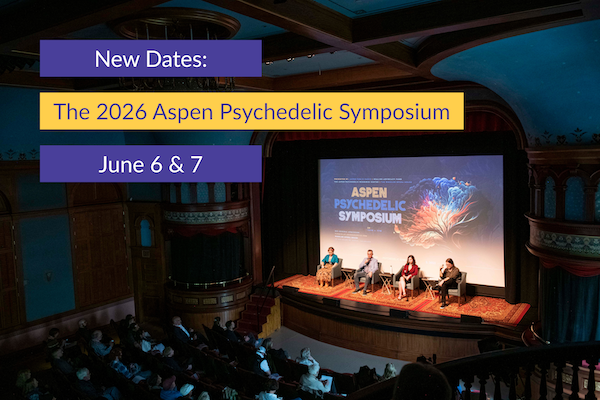
Dates for the 2026 Aspen Psychedelic Symposium have been changed to June 6 and 7 of this year. Held in Aspen—the heart of the Rockies—this annual convening brings together leading researchers, clinicians, cultural leaders, and community members to explore the future of psychedelic healing.
At a moment when psychedelics are rapidly entering mainstream culture, the Symposium is grounded in a clear purpose: to help ensure this evolving field is guided by wisdom, safety, and care. The gathering is designed to foster informed dialogue, reduce stigma, and strengthen a community committed to ethical stewardship—where healing is approached with responsibility, humility, and respect. Programming details and registration information will be available soon.
> Learn more
IN THE NEWS
N.F.L. Careers Scarred Their Brains. Could Mushrooms Provide Relief?
New York Times
It was the final two minutes of a lopsided game in 2018 when a ferocious tackle left Buffalo Bills quarterback Derek Anderson lying face down on the turf. For a few seconds, he couldn’t move. With fog in his brain and ringing in his ears, Mr. Anderson managed to stand up and walk back to the locker room. When his father came in to check on him, Mr. Anderson broke down into tears. He knew he’d played the last game of an N.F.L. career that had spanned 14 seasons. He had just suffered his seventh diagnosed concussion.
> Read the full story
Compass Says its Psilocybin Drug Helped Patients with Severe Depression in Two Trials
STAT News
Compass Pathways on Tuesday disclosed results from two Phase 3 studies that support a potential approval of its psilocybin treatment for severe depression, but more detailed data are needed to determine how beneficial the drug would be for patients.
> Read the full story
We Toured Three Psychedelic Healing Centers in Colorado. Here’s What We Saw.
Colorado Public Radio
Right in the middle of downtown Aspen, tucked away in a far corner, is a space for a newly legalized form of treatment — one where people struggling with depression or addiction, with past trauma or anxiety, even with a desire for spiritual or mental growth, can begin psilocybin-assisted therapy.
> Read the full story
Oregon’s Psilocybin Program: Industry Insiders Weigh In On Closures and the Future
Lucid News
Angela Allbee, Oregon Psilocybin Services (OPS) Section Manager at the Oregon Health Authority, disputes that the state’s psilocybin program is in crisis. “We’ve been focused solely on one license type (service centers), and we’re failing to talk about the story of almost 400 licensed facilitators and the fact that this model established a new healthcare profession,” she told Lucid News.
Allbee noted that more than 15,000 people have been served under the Oregon model. “From a safety standpoint, and a service center’s ability to deliver and provide services, things seem to be going quite well,” she said.
> Read the full story