
Healing Happens Because We Keep Showing Up
At Healing Advocacy, we know that building a groundbreaking, transformative mental health and wellness program across three states takes years of hard work. The landscape shifts as new research emerges and providers who've already helped tens of thousands of clients develop new and better practices. We must keep evolving the regulations that govern these programs, adapting to changing circumstances, demand, and new information about what’s effective and safe. And we must be ready to act when these hard-won programs face external pressures, like shrinking state budgets, that threaten to undo what we've built.
In Oregon, where the nation’s first regulated psilocybin therapy program has already helped more than 22,000 people find safe, meaningful care, regulators have proposed doubling program licensing fees across the board. We're working with providers, service center owners, manufacturers, and the state's only testing lab to help the Governor and the Oregon Health Authority understand how damaging this would be for the people and communities benefiting from this program. Our goal is to help policymakers find cost-effective ways to fund the needed regulatory function without pricing out the small clinics and sole practitioners who make this care accessible, and without leaving patients to pay the difference or lose access altogether.
In New Mexico, we’re working with healthcare policy experts and advocates to help the community and the state navigate what will be the first medical psilocybin program designed for accessibility to those who need it most and compatibility with insurance coverage. It’s a process requiring extensive coordination, a transparent process, and a program design that meaningfully balances safety and accessibility, drawing from the lessons already learned in Colorado and Oregon.
In Colorado, we’ve focused on working closely with regulators to refine and improve the regulatory environment and expand client access to healing. That’s why we supported a bill earlier this year that streamlined the licensure process to make it less expensive and time-consuming, and opened the door to sessions at temporarily licensed locations like rural and mountain retreat centers. Most recently, we’ve been in conversation with healthcare professionals who want to support safe access for people with neurodegenerative conditions, pain conditions, and paralysis, and we are working with them to identify potential changes to best meet those patients’ needs.
In everything we do, we look to the many people who need access to psychedelic healing now. People like James, who came to Colorado for psilocybin therapy and said:
“The depth of healing and scope of learning I experienced here is difficult to describe with words. Psilocybin can open profound inner doors, but it is the combination of the medicine and the container that makes the transformation truly powerful.”
I couldn’t have said it better myself.
With gratitude,
Taylor West
Executive Director
UPDATES: COLORADO
Up to Date Numbers on Natural Medicine Program Licensing
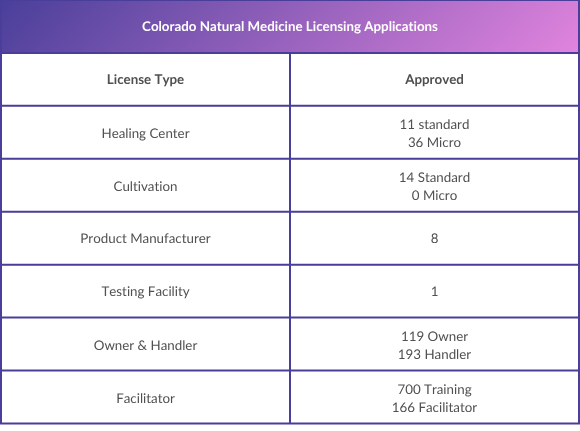
View HAF's Healing Center Directory for a list of licensed healing centers in Colorado. You can also search for facilitators using DORA's licensee lookup tool.
Coloradans Experience Healing and Transformation
A year after Colorado’s first licensed healing centers opened their doors, stories of healing and transformation have emerged. Over 1,500 people have now accessed care in Colorado’s psilocybin therapy program. As we have seen in Oregon, each experience is unique, and yet common themes start to appear. Participants describe finding new insights; breaking free of negative thought patterns; experiencing peace, grounding and clarity; and shifting their relationship with past trauma:
“The emotional healing was profound—like layers of old wounds finally softening.”
The compassion, wisdom and support of facilitators are integral to feelings of safety and ability to sit with challenging emotions:
“The experience brought up some hard things of course, but I felt supported enough to stay with the emotions, which allowed me to access a deeper level of insight than I’ve ever reached in talk therapy alone.”
“I was able to fully let go and trust the process which made for an experience that was truly life-changing.”
“It wasn’t just the psilocybin; it was the trust, the care, and the expertly crafted environment. Thanks to that experience, I stepped forward lighter, stronger, and truly ready to live on my terms.”
Many clinical facilitators integrate other modalities such as talk therapy and Internal Family Systems – something that Healing Advocacy helped make possible.
“Having access to a plethora of tools has allowed me to progress through various sticking points and find a peace and balance I didn't even know was possible.”
Testimonials from participants align with what we see in our work – a community of skilled, compassionate professionals who care deeply about client safety and healing. This strong early foundation will set the tone as the program continues to grow and evolve.
UPDATES: NEW MEXICO
Medical Psilocybin Rulemaking
On July 23, the Department of Health initiated rulemaking on licensing, training, and education provisions of the program, including certain provisions that have drawn concerns from the Advisory Board and the broader stakeholder community. The Department set a public hearing for August 28 on those rules, and that hearing has since been postponed. At the time of this update, it has not been rescheduled.
Healing Advocacy is advocating for significant revisions to the licensing, training, and education provisions, so the concerns raised by the Advisory Board and stakeholders can be fully addressed. We are tracking developments closely and will share confirmed timelines and concrete ways to weigh in as soon as they are available.
UPDATES: OREGON
Up to Date Numbers on Psilocybin Services Program Licensing
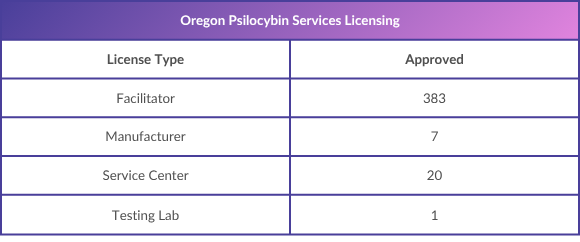
View the Oregon Psilocybin Services Data Dashboard to see the most up-to-date numbers.
Webinar Recording: Advocating for Oregon’s Psilocybin Therapy Program
Oregon Psilocybin Services (OPS) has proposed a doubling of licensing fees for all participants (facilitators, service centers, manufacturers and testing labs). Watch Healing Advocacy’s webinar for more context on the state’s budget situation, a political analysis of the current pathways to change, and clear action steps to advocate for Oregon’s psilocybin therapy program.
The doubling of fees would be far beyond anything comparable in Oregon's health care licensing landscape — and is damaging for a program that is still finding its footing. This is the moment to be leaning into support for an effective, life-changing program.
Use our letter writing tool to contact Governor Tina Kotek and the Director of the Oregon Health Authority, Fariborz Pakseresht, letting them know the importance of this program.
Take Healing Advocacy's Facilitator Impact Survey on the Proposed Fee Increases
Healing Advocacy is conducting a brief 2-minute survey of licensed facilitators around the state’s proposed doubling of fees. We are looking to gather critical information on how the proposed fee increase would impact facilitators decision to renew, and the overall long-term impact on the program and budget. The toplines from this survey will help inform our advocacy efforts and provide essential information that has yet to be collected about the impact of these cuts.
> Take the Facilitator Impact Survey
COMMUNITY SPOTLIGHT
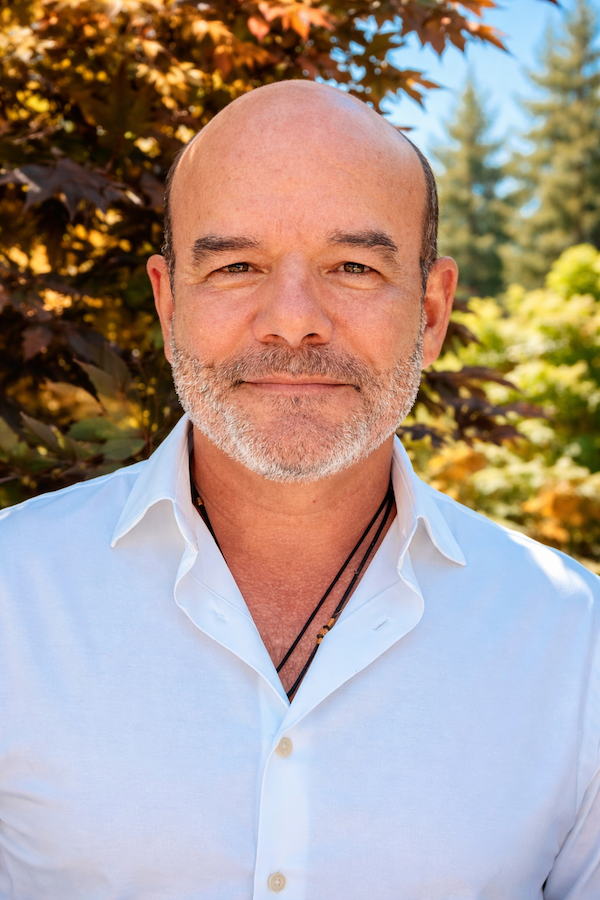
Bruce Zufelt: Beyond Addiction
A licensed clinical social worker, addiction counselor, and Oregon-licensed psilocybin facilitator, Bruce Zufelt has more than two decades of experience helping individuals heal from addiction, trauma, anxiety, and depression. He is the founder and Clinical Director of Trubriety, a behavioral health program that treats mental health and substance use together through an integrated, relationship-centered approach.
What first drew you to combine psilocybin therapy with addiction counseling? Is there a specific moment or case that convinced you this was an effective new tool for your clients?
After more than twenty years working with people struggling with addiction, one thing has become increasingly clear to me: most people are not relapsing because they didn't want recovery badly enough. They are trying to manage emotional pain they have not yet found a way to heal.
When I first began learning about psychedelic-assisted therapy, I was not looking for something to replace good therapy. I was wondering whether it might help people reach places that sometimes take months to access in traditional talk therapy treatment. And it was not one dramatic success story that convinced me, it was seeing the same pattern over time. People weren't just talking about themselves differently; they were experiencing themselves differently. That made me believe psychedelic-assisted therapy has an important role to play in behavioral healthcare, and it made me want to keep learning.
You have described sessions that can accomplish in a single afternoon what sometimes takes months of talk therapy. Can you walk us through what that actually looks like in the room? What's happening for the client?
I appreciate talk therapy because it works, but it takes time. I spend weeks or months building enough trust with clients to approach the parts of their lives they have worked very hard to avoid. The reality is most of us get pretty good at staying away from emotional pain. We stay busy, we numb ourselves, we convince ourselves we have moved on. These strategies often helped us survive, but they can also make healing a slow process.
One of the things I have observed consistently in psychedelic-assisted therapy is how often those protective patterns soften. I have watched people approach grief, fear, shame, and trauma in ways they simply hadn't been able to through years of traditional therapy. They are not just talking about those experiences anymore—they're sitting with them, understanding them differently, and often finding a level of compassion for themselves they didn't know was possible.
You talk about the importance of people moving from identifying as an addict to reconnecting and healing the experiences that have driven addictive behavior. What does that shift actually look like when you see it happen in someone? What is psilocybin therapy's impact on that?
A big part of my work is helping people see themselves differently, beyond identifying as an alcoholic or an addict. I don't believe addiction tells us who someone is. More often, I see it as an attempt to cope with emotional pain.
Traditional therapy can gradually help people discover there's more to them than shame, fear, or addiction. Beneath all of that is what I think of as the Self—the compassionate, grounded part of us that was never lost. One of the most meaningful things I have witnessed in psychedelic-assisted therapy is seeing people experience that for themselves. It is no longer just an idea we have talked about in therapy. They feel it.
People often leave realizing the medicine didn't create something new. It helped them reconnect with something that had been there all along. Once you have experienced that, it is very difficult to go back to believing your addiction is who you are.
You founded Trubriety around treating addiction and mental health together instead of separately. Why does that split exist in the first place, and what happens when they are treated together?
Historically, addiction treatment and mental health treatment developed along separate paths. In real life, people don't experience them that way. The people I work with aren't just struggling with alcohol or drugs. They're often living with trauma, anxiety, depression, grief, or chronic stress at the same time.
When we only focus on stopping substance use, we can miss the reasons it became so important in the first place. I think people do better when we care for the whole person instead of trying to separate one problem from another.
That belief became the foundation for Trubriety. We built a behavioral health program where mental health and substance use are treated with equal importance, because in our experience, people heal best when we care for the whole person rather than one diagnosis at a time.
What are the main things you want policymakers in the state to know about the potential role of psilocybin therapy in treating addiction?
Oregon has done something courageous. We've created a legal framework that allows us to learn. I am hoping we do not lose that opportunity.
As we move forward, I want us to continue supporting research, maintaining high ethical standards, and creating opportunities for facilitators, physicians, therapists, treatment programs, insurers, and policymakers to learn from one another. The more connected those conversations become, the more we will understand where this treatment belongs—and who it can genuinely help. If psychedelic-assisted therapy ultimately proves to have a lasting place in behavioral healthcare, I don't think it will be because it replaced traditional treatment. It will be because we learned how to integrate it responsibly into the systems already helping people recover.
My hope is that Oregon becomes known not simply as the first state to legalize psilocybin services, but as the place that showed the rest of the country how to integrate psychedelic-assisted therapy responsibly into behavioral healthcare. If we do that well, we will create something far more valuable than a new treatment—we will create a stronger, more connected system of care for the people who need it most.
IN THE NEWS
Exploring Psilocybin-Assisted Therapy for Cancer Patients' Trauma
Targeted Oncology
Moran Amit, MD, PhD, a head and neck surgical oncologist at UT MD Anderson came to psychedelic research through an unexpected path. His original work focused on how tumors hijack the nervous system, which led him to investigate tryptamines—the drug family that includes psilocybin—as potential tools to reverse that process. This research intersected with a problem he saw constantly in his clinical practice: head and neck cancer carries one of the highest suicide rates among cancer types, partly because treatment can leave visible, unconcealable physical changes that isolate patients even after they're medically cured.
> Read the full story
Oregon Regulators Propose Steep Psilocybin Fee Hikes
Oregon Public Broadcasting
State regulators are seeking steep fee hikes on Oregon’s nascent psilocybin industry, a move that critics say would push the already high price tag of a legal mushroom trip even higher while causing more businesses to close. The Oregon Health Authority in late June announced proposed fee increases that would affect virtually every corner of the industry, aiming to financially sustain the groundbreaking program. Among the biggest changes would be doubling annual license fees from $10,000 to $20,000 for psilocybin manufacturers and service centers where adults 21 and older take supervised trips.
> Read the full story
Psilocybin Therapy Shows Potential as a Treatment for Anorexia Nervosa in Small Trial
Imperial College London
A small pilot study from the Centre for Psychedelic Research at Imperial College London indicates that psilocybin – the active ingredient in psychedelic ‘magic mushrooms’ - may have potential as a treatment for anorexia nervosa, when combined with therapy.
> Read the full story