Making Psychedelic Therapy a Promise – Not a Privilege
Because affordability and accessibility are at the core of our work, we think seriously every day about how psychedelic therapy can be better integrated into our existing healthcare infrastructure. Even as the current system struggles to be accessible and affordable for those seeking behavioral healthcare, we recognize that greater access cannot be achieved without engaging with state Medicaid programs and third-party payers, and without reforming the regulatory frameworks that shape how care gets funded and delivered.
As the first exclusively medical state psilocybin therapy program in the country, New Mexico represents both a proving ground and an opportunity to demonstrate how this care can be integrated into the broader health system. Healing Advocacy has been working closely with the Psychedelic Mental Health Access Alliance as they develop care models that are genuinely affordable and ultimately insurable, and with Victoria Cvitanovic of Rudick Law Group, whose Medicaid expertise is helping us anticipate and navigate the distinct legal and regulatory challenges of this first-of-its-kind framework. Through this work, we are actively examining what it would mean for state Medicaid programs and other third-party payers to cover the major components of care surrounding the administration of psychedelic services, not as a distant aspiration, but as a near-term strategic priority.
It's also why we continue to champion the comprehensive, safe, and successful Oregon and Colorado programs, which over the last several years have done something genuinely groundbreaking — built regulatory frameworks, trained facilitators, licensed healing centers, and developed real safety protocols for psilocybin care. The infrastructure created in these programs is real, operational, and valuable to all future efforts for access, whether through prescription or non-prescription pathways.
Healing Advocacy will continue to work both inside and outside of the current healthcare system to integrate psychedelic healing and to improve how that healing is delivered. We do this because people are suffering now, and everything we do is in service of the day when transformative care is not a privilege, but a promise.
Thank you for your support.
Taylor West
Executive Director
UPDATES: OREGON
Up to Date Numbers on Psilocybin Services Program Licensing
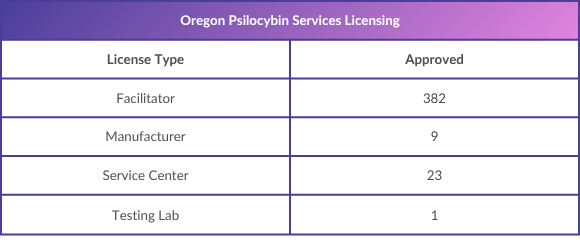
View the Oregon Psilocybin Services Data Dashboard to see the most up-to-date numbers.
Apply for the OPS Rules Advisory Committee
From OPS: “Oregon Psilocybin Services (OPS) will convene a Rules Advisory Committee (RAC) this summer to discuss proposed administrative rules related to psilocybin services, including implementation of 2026 legislation. If you are interested in applying to serve on a RAC this year, please read this email and submit a 2026 RAC application.
RAC members provide input on proposed administrative rules before they become effective and are an important part of the rulemaking process. RACs are comprised of individuals who have different kinds of subject matter expertise and lived experience, and who are likely to be affected by the proposed rules. The RAC process is designed to include a diversity of opinions and viewpoints. In addition to providing recommendations, RACs evaluate fiscal and racial impact of the proposed rules.
OPS will convene two RACs to discuss proposed rules related to 1) Training and Facilitation and 2) Products and Premises. Each RAC will meet twice between July 6 and July 9, 2026. After the RACs meet, OPS will combine their feedback for consideration before publishing a complete set of proposed rules for public comment. Applicants will need to be available during regular business hours during this time. Exact meeting times will be scheduled based on RAC member availability.
If you would like to apply to serve on a RAC, please download, save and complete the 2026 RAC Application form. Then attach your completed form to an e-mail sent to: OHA.Psilocybin@OHA.oregon.gov by Friday, June 5, 2026.
No-Cost Retreat for Justice-Impacted Individuals
The Inward Dive Fund / Sheri Eckert Foundation is inviting justice-impacted and previously incarcerated individuals to take part in a legal psilocybin group retreat in Portland this July, offered at no cost to participants.
In addition, please feel free to share this opportunity with someone who may be a fit. The application takes about 5 minutes.
This opportunity is especially intended for people who have been incarcerated for six months or more in jail or prison. The retreat will include a small group of about 5 to 10 people and will take place all day on either Friday, July 17th or Saturday, July 18th at a legal psilocybin service center. The retreat may also include an optional research component.
Retreat Details:
Location: Service Center in the Portland area
Retreat day: either Friday, July 17 or Saturday, July 18, 2026
Approximate time: 10:00 AM to 6:00 PM
Possible follow-up research/interview day: Sunday, July 19, 2026
The Sheri Eckert Foundation is a 501(c)(3) nonprofit project working to increase equitable access in the emerging state-regulated psychedelic healthcare movement. The Inward Dive Fund is a project of the foundation that helps expand access to legal psilocybin care for people and communities who might otherwise be unable to participate.
> Learn more & apply
UPDATES: COLORADO
Up to Date Numbers on Natural Medicine Program Licensing
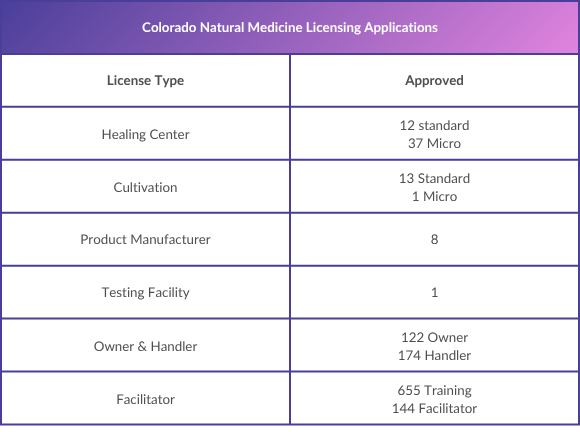
View HAF's Healing Center Directory for a list of licensed healing centers in Colorado. You can also search for facilitators using DORA's licensee lookup tool.
Colorado Passes Ibogaine Bill, Makes Changes to Psilocybin Program
On May 13, the Colorado legislature passed House Bill 26-1325 on May 13, with the bill now awaiting Governor Polis's signature. The bill establishes a first-of-its-kind ibogaine research pilot program within the state's Behavioral Health Administration (BHA). Under the program, the BHA may approve up to five pilot sites, which must then seek federal approval to study ibogaine's safety and effectiveness in treating mental health and substance use conditions.
The bill includes medical oversight requirements, onsite screening and equipment standards, and a notable cultural responsibility provision requiring applicants to establish benefit-sharing plans with Central African communities traditionally connected to iboga and ibogaine practices. Passage is also well-timed: the bill positions Colorado well to pursue federal grant funding outlined in the recent Executive Order on psychedelic treatments.
In addition to ibogaine, House Bill 26-1325 makes several changes to Colorado's psilocybin therapy program, which reflect Healing Advocacy’s stakeholder engagement and advocacy. Key changes include:
Separate Sales — Creates a "Limited Regulated Natural Medicine Sales License," allowing healing centers to separate the sale of natural medicine from session services, helping centers mitigate tax liability and access banking services.
Temporary Premises — Allows healing centers to apply for temporary premises licenses at non-licensed locations, expanding access for retreats and rural offerings.
Testing Labs Contingency — Allows the Division to temporarily waive or adjust testing requirements if no licensed or certified lab is available in the program.
UPDATES: NEW MEXICO
Community-Informed Psilocybin Research for PTSD
The University of New Mexico’s psychedelic research pilot is currently seeking veteran and first responder participants for its PTSD treatment study. The clinical trial will offer participants psilocybin-assisted therapy in a model exploring a new approach to treating PTSD — one that centers community, peer support, and group healing. The Group Psilocybin-Assisted Therapy (GPAT) study is investigating whether psilocybin-assisted therapy delivered in a group format, among participants who share similar backgrounds or trauma histories, can provide meaningful therapeutic benefit for people with PTSD. The study uses trained peer facilitators (veterans supporting veterans, women survivors supporting one another) working alongside licensed therapists. Participants take part in two group dosing sessions using a natural, whole-mushroom product, along with multiple preparation and integration sessions, with options for longer-term support.
The study is a collaboration among several leading organizations, including the UC Berkeley Collaborative for the Economics of Psychedelics, the Psychedelic Mental Health Access Alliance, and the Heroic Hearts Project. Learn more or apply to the study online, or email GPAT@salud.unm.edu. The program is open to New Mexican residents 18 years of age or older.
> Apply to the study
COMMUNITY SPOTLIGHT
Hanifo Nayo Washington: Healing Justice in an Era of Psychedelic Medicine
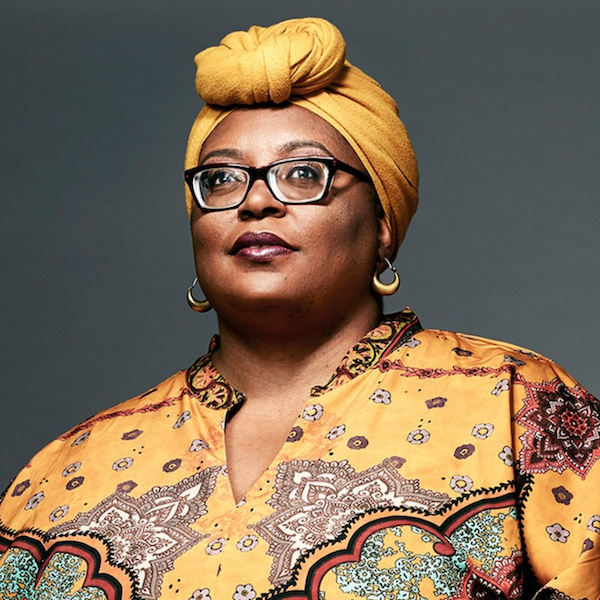
Hanifa Nayo Washington (she/her) is a systems catalyst, psychedelic facilitator, and healing justice practitioner. As Co-Director of the Psychedelic Mental Health Access Alliance, she works to bridge psychedelic-assisted care into public health systems — building evidence for policymakers, insurers, and state agencies while integrating clinical care, peer support, and culturally grounded healing practice with the infrastructure that turns research into real-world access. With 30+ years in the nonprofit sector and 15+ years in psychedelic facilitation, she serves as Founding Team Emeritus of Fireside Project, is a certified psilocybin facilitator and Lead Facilitator with Beckley Retreats, contributes to New Mexico's Medical Psilocybin Advisory Board, and serves on the boards of the Zendo Project and Kindred Trust. Drawing from her roots in Afro-Indigenous lineage, mindfulness, and spirituality, her work bridges policy, practice, and beloved community grounded in a single conviction: access is the work.
You describe yourself as a sacred activist and healing justice practitioner — identities that don’t always map neatly onto the clinical and regulatory world of psychedelic-assisted therapy. Where and how does your work as an activist connect to regulated psychedelic therapy? Where and how does it come into tension with it?
Often when I’m asked to describe myself, there’s an expectation that I’ll begin with credentials — degrees, certifications, institutions, titles. Those things matter, but they don’t tell us much about how a person moves through the world or what values guide the way they engage with healing, community, power, and care. So when I describe myself as a sacred activist and healing justice practitioner, I’m naming the operating system underneath my work — the ethical, relational, and spiritual values through which I move whether I’m in ceremonial spaces, facilitating psychedelic-assisted care, helping shape policy, or influencing the design of public health systems intended to bring healing to more people.
To me, sacred activism (a term popularized by Andrew Harvey) is the practice of bringing deep spiritual and ethical devotion into grounded action — refusing the separation between personal healing and collective transformation. The healing justice movement, rooted in the work of Black, Indigenous, queer, and Southern organizers including the Kindred Southern Healing Justice Collective, carries a similar pulse. Those frameworks shape how I think about safety, community participation, public access, culturally attuned care, and systems design. For me, this work has never only been about treatment models or regulations. It’s about building systems that remember our humanity — systems rooted in dignity, belonging, relationship, and real healing.
What are the most important considerations for us to hold when designing psychedelic therapy programs to ensure equity and broad access in a time when equity and access in behavioral healthcare across the board is falling short?
I think one of the most important things we need to hold is that there is no one-size-fits-all psychedelic-assisted care model that will effectively serve every community. Different populations carry different histories, relationships to healthcare systems, cultural contexts, trauma experiences, spiritual frameworks, and barriers to care. Part of the work right now is testing, demonstrating, and refining care models that are culturally responsive to the actual communities they are intended to serve rather than assuming a single clinical approach will work universally across populations.
Another major piece is identifying and helping solve for the barriers that prevent people from accessing care in the first place — especially within mental healthcare systems already struggling with inequity, affordability, workforce shortages, and fragmentation. One of those barriers is the stigma and fear associated with psychedelic medicines themselves, particularly within communities that have been disproportionately harmed by the War on Drugs and punitive criminalization policies. At the same time, we need to be actively developing, equipping, and inspiring a workforce prepared to serve these communities — and that workforce should increasingly reflect the lived experiences and cultural backgrounds of the populations carrying some of the greatest mental health burdens. My hope is that the emergence of psychedelic-assisted care models can also become a kind of lighthouse within the broader mental healthcare system — demonstrating that more relational, community-informed, and equitable approaches to healing are not only possible, but deeply needed.
New Mexico is aiming to see its first patients by December 2026 — and you are on three advisory board subcommittees helping the State of New Mexico. What are the most important things the advisory board needs to do over the course of the year to protect equitable access as the program launches and scales?
One of the most important things the advisory board can do is ensure that the Equity, Access & Cultural Considerations subcommittee has sufficient opportunity to review and interface with the recommendations emerging from all of the other advisory subcommittees as the program takes shape. Equity cannot exist as a siloed conversation separate from workforce development, licensing, training standards, end-of-life care models, or regulatory implementation. If equity and cultural considerations are not integrated across the full ecosystem of recommendations, there is a real risk that decisions made early in the process could unintentionally create long-term inequitable outcomes that become difficult to reverse once systems are operationalized.
I also think it’s critically important that the state continues building mechanisms for ongoing review, adaptation, and community feedback as the program evolves. Right now, there is still so much we do not know about who will ultimately seek care, what different populations and conditions will require, and what barriers communities may encounter. New Mexico has an opportunity to build a regulatory model that remains responsive rather than rigid — one that can continue learning and adapting as the needs of the people seeking care become clearer through lived implementation.
What does authentic community participation in research and regulatory program-building look like in practice? Where could we do a better job of reaching people to get them involved
Authentic community participation in psychedelic-assisted care research and regulatory development requires much more than asking people for feedback once a protocol is already designed. To me, meaningful engagement means creating a full circle of relationship, trust-building, listening, interpretation, transparency, and continued participation throughout the life of a project. That starts with taking the time to build authentic relationships and partnering with community-based organizations, local leaders, and trusted cultural stewards already deeply connected to the communities being engaged. It also means creating multiple pathways for participation — from mobile-friendly surveys and storytelling spaces to focus groups, design studios, town halls, and virtual and in-person listening sessions held at different times and formats to accommodate people’s real lives.
Equally important is creating strong pathways between community wisdom and the researchers, clinicians, and policymakers shaping protocols and regulations. Not every recommendation will ultimately be feasible, but there should be transparency around what was heard, what was incorporated, and why. I also believe one of the biggest gaps in community engagement work is what happens after information is gathered. Too often communities are asked to contribute stories and insight without ever hearing what became of them. Closing the loop matters. Communities should receive findings, updates, reports, and opportunities to continue shaping the work so engagement becomes collaborative rather than extractive.
PMHA is partnering with UNM on a Group Psilocybin-Assisted Therapy study for PTSD. What design choices in that pilot are you most proud of — and where are the places where the equity principles are pushing up against institutional or regulatory constraints?
PMHA Alliance is co-implementing, alongside the University of New Mexico Department of Family & Community Medicine, an open-label Phase I FDA-approved Group Psilocybin-Assisted Therapy (GPAT) study for PTSD led by Dr. Larry Leeman. Veterans and first responders, women survivors of sexual trauma, and Indigenous and Tribal community members move through a 15-week protocol in cohorts of six supported by two licensed therapists and two certified psychedelic peer facilitators with shared lived experience. We’re also proud of designing our own immersion and training modules, including trauma-informed facilitation, veteran-centered care sessions led by Heroic Hearts Project, challenging group simulations led by the Fireside Project utilizing the LUCY platform, and guidance from Indigenous wisdom keepers and legacy practitioners.
One of the clearest lessons — and sticking points — that emerged from our community engagement process was the question of what happens after the clinical protocol ends and how people continue to be supported once the study is over. That understanding shaped PMHA Alliance’s Circle of Care model — a three-month post-protocol integration and embodiment support ecosystem being developed alongside the UNM GPAT care model. Circle of Care connects participants to seven domains of support, including clinical therapy, peer support, somatic practices, creative modalities, spiritual care, family support, and community resource navigation, all populated by vetted local, state, and national resources and facilitators. Our hope is to adapt Circle of Care across future PMHA pilots around the country, while also exploring one of the field’s biggest implementation questions: how do group care models and long-term integration ecosystems translate into real-world, state-fundable and publicly fundable mental health infrastructure while still maintaining quality, safety, and cultural responsiveness?
RESEARCH
Americans Are Warming to Psychedelics — Cautiously
A new report from the UC Berkeley Center for the Science of Psychedelics offers a nuanced look at where U.S. voters stand on psychedelics. Surveying over 1,500 registered voters in 2025, the researchers found growing support for regulated access and scientific research — 63% strongly support making psychedelics easier for scientists to study, up from 49% in 2023 — though there are persistent stigma and safety concerns that vary significantly across demographic and political lines.
Majorities of voters now believe veterans, people with depression, and people with addiction should have regulated therapeutic access to psychedelics, and 86% favor either regulated access or decriminalization for people in end-of-life care. Yet fewer than 20% of voters believe psychedelics are safer than alcohol or tobacco, roughly a quarter view users as irresponsible or addicts, and no professional source of information is rated "very trustworthy" by more than a third of voters.
> Read more
Psilocybin's Effects on the Brain After One Dose
A study published in Nature Communications offers some of the most detailed evidence yet of how a single high dose of psilocybin changes the human brain. In a placebo-controlled study of 28 healthy, psychedelic-naive adults given 25mg of psilocybin, researchers used EEG and MRI to track brain changes from one hour to one month post-dose. Psilocybin dramatically increased brain entropy (a measure of neural complexity) and that acute spike predicted both greater psychological insight the following day and improved wellbeing a month later.
Imaging also detected possible lasting anatomical changes in the brain’s white matter, cautiously interpreted as evidence of neuroplasticity following a single psychedelic experience. Participants showed improved cognitive flexibility and wellbeing at one month; none of these effects appeared in the placebo condition. The findings suggest that the depth of the psychedelic experience itself may be central to psilocybin's therapeutic potential.
EVENTS
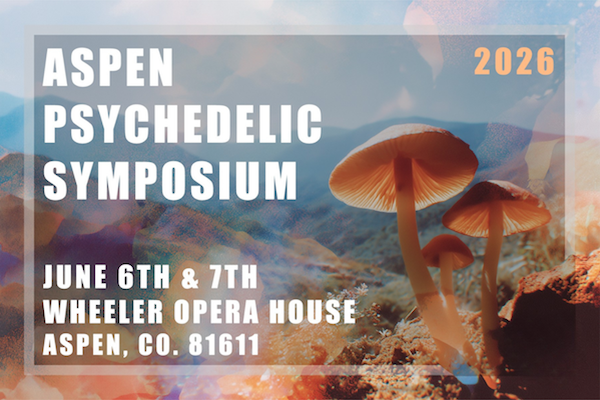
Last Chance to Attend the Aspen Psychedelic Symposium
This June 6-7, join Aspen Public Radio, Healing Advocacy Fund, and the Aspen Psychedelic Resource Center for the 3rd Aspen Psychedelic Symposium. Learn more and buy tickets online.
This gathering at the historic Wheeler Operahouse brings the full spectrum of voices in psychedelic healing under one roof — pioneering researchers and clinical experts alongside clients, community practitioners, and everyday people navigating what this moment means for health and healing.
For those wanting to directly participate in Colorado’s legal psilocybin program during their time in Colorado, there are several licensed healing centers in Aspen, including: Aletheia Healing Center, NeuroBloom, and SANCTUM.
Immediately prior to the Symposium, June 4-6, Sanctum Aspen is hosting Healing for What, a psychedelic-assisted leadership retreat designed for founders, researchers, funders, and others shaping the future of the field. The retreat weaves structured dialogue, somatic work, and a legal psilocybin experience under Colorado's regulated natural medicine program — concluding just as participants transition into the Symposium itself. Reserve your spot for Healing for What.
> Register for the symposium
IN THE NEWS
Magic Mushrooms Could Be Effective Treatment for Cocaine Addiction, Study Shows
The Guardian
Results from a new clinical trial show that a single dose of psilocybin could be an effective treatment for cocaine addiction. The study, published in Jama Network Open this month, showed that 19 participants who received a single dose of psilocybin were more likely to abstain from cocaine than 17 participants who received a placebo of diphenhydramine, a common antihistamine. Participants in both groups worked with a therapist to process their experiences.
> Read the full story
Five Big Takeaways from the 2025 UC Berkeley Psychedelics Survey
UC Berkeley Center for the Science of Psychedelics
Psychedelics are having a moment — in labs, in legislatures and in mental health spaces. But how does the U.S. public actually feel about them? That’s what the UC Berkeley Psychedelics Survey set out to find. Now in its second administration, this year’s survey tracks shifting American attitudes during a period of rapid legal, scientific, political and cultural change — providing the kind of data that can inform policymaking and public education.
> Read the full story
Psychedelic Treatments are on the Verge of FDA approval. Why Texas is Pushing for Them
Houston Public Media
Psychedelic treatments are moving closer to federal approval, with the U.S. Food and Drug Administration taking steps to fast-track several compounds under review. The agency recently said three companies will receive National Priority Vouchers to speed their psychedelic drugs through the approval process.
> Read the full story
The Man Behind the Trump Administration’s Favorite Psychedelic
The Atlantic
W. Bryan Hubbard speaks a lot about divinity. He thinks that psychedelic drugs have divine origin and can put you in touch with a higher power. He also believes that his role in catalyzing the most prominent political action supporting psychedelics to date was divinely orchestrated.
> Read the full story