Psychedelics as survivor-centered care
April is Sexual Assault Awareness Month, and I want to take that opportunity to reflect on what I believe is an underappreciated but absolutely vital reason to support access to psychedelic healing - the role psychedelics may play in healing the trauma experienced by survivors of intimate partner violence and sexual assault.
In the U.S., women are twice as likely as men to develop PTSD, and a major factor in that reality is our higher exposure to sexual assault.
The impacts of sexual assault and intimate partner violence are devastating. More than 80 percent of survivors develop PTSD symptoms within a week of an assault, survivors experience anxiety and depression at higher rates than the general population, and many struggle with substance use and eating disorders over the long term.
Now two promising clinical trials are underway to study how psilocybin-assisted therapy might help survivors recover from PTSD related to sexual assault and intimate partner violence.
The first, conducted by Sunstone Therapies, is a phase 2, open-label study to explore the efficacy, safety, and tolerability of psilocybin-assisted therapy in women with sexual assault-related Posttraumatic Stress Disorder (PTSD). This study is currently recruiting participants. For more information or to inquire about participation, visit Sunstone's website or contact their team at clinical.specialists@sunstonetherapies.com.
The second, led by researchers at the University of Calgary, is investigating the potential of psilocybin-assisted therapy to improve PTSD symptoms in survivors of intimate partner violence. You can find more information about that study here.
These trials represent some of the first efforts to study psilocybin therapy with these specific survivor populations, who have been underrepresented in the psychedelic medicine discussion to date.
As research and lived experiences deepen our understanding of what psychedelic therapies can offer, Healing Advocacy will continue to advocate for broad access, rigorous data, and care designed to put people’s needs first.
We invite you to join us in building a future where all survivors of trauma are able to safely access this potentially transformative tool. Through your donation, your advocacy, or simply sharing this letter, you are part of a movement committed to healing and hope.
Thank you for your support.
Taylor West
Executive Director
UPDATES: NATIONAL
Healing Advocacy Fund Statement on Psychedelic Executive Order
On Saturday, April 18th, Healing Advocacy Fund Executive Director Taylor West issued this statement in response to the President’s Executive Order on psychedelics:
“Today’s executive order is a victory for the millions of Americans living with conditions like treatment-resistant depression, anxiety, addiction, and post-traumatic stress that existing treatments have failed to address. Federal momentum on psychedelic medicine has been a long time coming, and we welcome the growing bipartisan recognition of its promise.
We are deeply grateful for the decades of advocacy and research that have led up to today.
Healing Advocacy Fund’s work on behalf of safe, effective access to psychedelic therapy in Oregon, Colorado, and New Mexico has shown us what’s possible when policy is built around patients. More than 20,000 people have been served, with transformative outcomes and an extremely low number of safety concerns.
We can do this. We are doing this.
As federal approvals approach, Healing Advocacy is committed to ensuring that as many people as possible — across conditions, communities, and access pathways — can safely achieve the healing these therapies offer.”
New Brain Imaging Study Reveals How Psychedelics Rewire the Brain
A major new brain imaging study published in Nature Medicine offers the clearest picture yet of what psychedelics do to the brain. Researchers from three continents pooled data from 267 people who had taken one of five classic psychedelics — psilocybin, LSD, DMT, mescaline, or ayahuasca — across 11 separate studies. They found a consistent pattern across all the drugs: increased communication between brain networks involved in higher-order thinking and those handling basic sensory processing, as if the brain's usual divisions temporarily soften. The findings help resolve contradictions across past research and strengthen the scientific foundation for understanding why psychedelic-assisted therapy may be effective for conditions like depression and anxiety.
UPDATES: OREGON
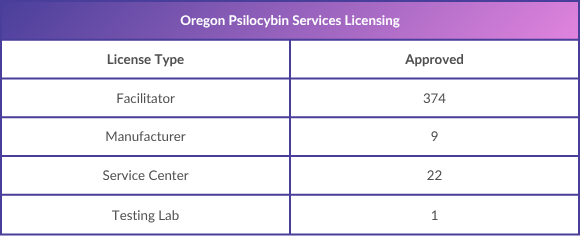
Up to Date Numbers on Psilocybin Services Program Licensing
View the Oregon Psilocybin Services Data Dashboard to see the most up-to-date numbers.
State Health Improvement Plan to Include Destigmatizing Psilocybin
The Oregon Health Authority has adopted a new State Health Improvement Plan (SHIP) that includes a strategy to “destigmatize psilocybin as a culturally responsive option for healing and wellness.”
The SHIP is a five-year plan for improving the health of all Oregonians — across all ages and communities. With over 60 strategies organized under four priority areas (Healthy Environments; Individual, Family, and Community Well-Being; Health Promotion and Disease Prevention; and Emergency Preparedness and Response), the plan reflects a commitment to inclusive, equitable health outcomes.
Oregon Psilocybin Services will collaborate with the Public Health Division's SHIP team to track and report on how this strategy advances long-term public health goals, with annual progress reviews.
For more information, read the OPS + SHIP Fact Sheet.
Give Feedback at OPS Listening Sessions
Oregon Psilocybin Services (OPS) is hosting two virtual Public Listening Sessions this May — open to everyone who wants to share feedback on the administration of the Oregon Psilocybin Services Act.
Wednesday, May 6 | 6:00 – 7:30 pm PT Join Zoom | Meeting ID: 161 683 2386 | Passcode: 272207
Friday, May 8 | 11:00 am – 12:30 pm PT Join Zoom | Meeting ID: 160 247 3042 | Passcode: 924549
UPDATES: COLORADO
Up to Date Numbers on Natural Medicine Program Licensing
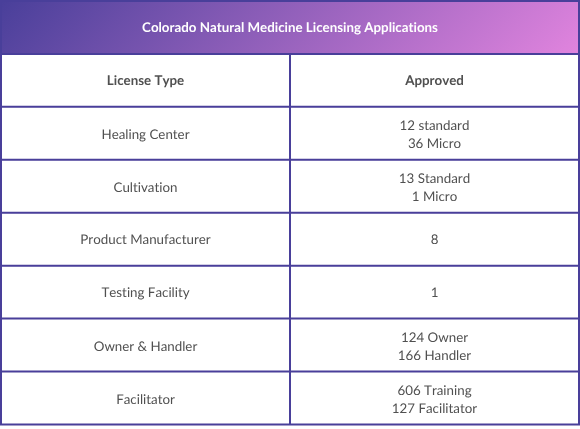
View HAF's Healing Center Directory for a list of licensed healing centers in Colorado. You can also search for facilitators using DORA's licensee lookup tool.
Changes to Program Rules Underway
Colorado’s Department of Revenue hosted a final rulemaking hearing on April 22 to consider changes to the regulation of healing centers, cultivation, manufacturing and testing labs. Regulators are expected to post final rules within the next few weeks, and the changes will become effective on July 1. Stay tuned for a summary of changes next month.
The other agency tasked with regulating Colorado’s program — the Department of Regulatory Agencies (DORA) — has meanwhile indicated their plans to re-open rulemaking related to Colorado facilitation and training requirements in the near future.
UPDATES: NEW MEXICO
Department of Health Holds First Rulemaking Hearing
On April 24, the New Mexico Department of Health held its first rulemaking hearing on draft regulations governing the cultivation and testing of psilocybin mushrooms under the state's program. Those rules are available from NM DOH. The Department will next turn to drafting rules related to facilitator training and education requirements. Meanwhile, the advisory board and its subcommittees continue meeting in support of the rulemaking process; schedules are posted on the DOH website. These meetings are open to anyone, though voting is limited to New Mexico residents on most committees.
COMMUNITY SPOTLIGHT
Christine Caldwell: The Case for Psychedelics at End of Life
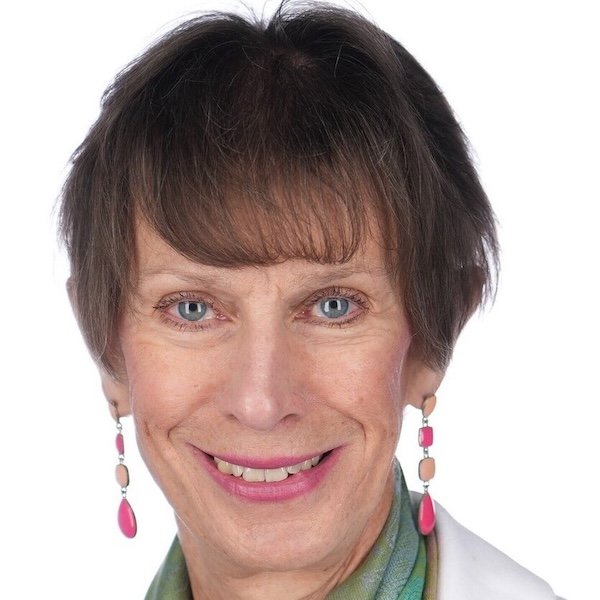
As the founder of End of Life Psychedelic Care, Christine Caldwell runs a nonprofit dedicated to educating patients and practitioners with the goal to advance compassionate psychedelic-assisted support during the end-of-life process. For several years she owned a 250-client home health agency, where she witnessed firsthand the limits of conventional care in addressing the anxiety, depression, and fear that so often accompany life-threatening illnesses. Drawn to groundbreaking research on psychedelics, Christine pursued rigorous training — including the Psychedelics Today Vital Therapies and Integration Program and Dr. Rosalind Watts' ACER Integration Program — and holds three certifications from the Deepak Chopra Program in Ayurveda, Meditation, and Total Wellbeing Coaching.
As a former owner of a home health agency, you have witnessed our modern approach to end-of-life care up close. What is it about this experience that has deepened your understanding of the benefits of psychedelics for people facing the end of their lives?
Traditional home health care attends to a client's physical needs and sometimes their social ones — transportation, daily support, practical care. But spiritual support has never been part of the picture. When I learned about the potential of psychedelic care to ease psychological and existential distress, I became convinced that home health care should incorporate ketamine where appropriate, and psilocybin where legal. We aren't there yet — but talking about it openly raises awareness that this kind of care is possible, and that it could benefit clients in ways that go far beyond what home health has traditionally offered.
Can you describe what "psychedelic care" actually looks like for a patient facing a terminal or life-threatening illness?
Psychedelic care at this stage of life builds on established protocols, but with two important distinctions: the client's mindset, and the nature of integrated care. A person facing a terminal or life-threatening illness carries a particular kind of weight — physical pain, fear of death, a loss of meaning or purpose. They may be struggling to let go, wrestling with their faith, navigating difficult family dynamics, or sitting with unresolved grief or forgiveness. A skilled facilitator must hold all of that. Beyond the session itself, this means weaving in medical screening where needed, family education, careful attention to consent, and a genuine understanding of the client's religious and spiritual traditions.
The research on psilocybin and existential distress in cancer patients is compelling, but you also work with ketamine and MDMA. How do you determine which modality is right for a given patient?
Choosing the right medicine for a patient involves weighing many factors together — physical health, intention, prognosis, availability, and legality all play a role.
MDMA, for instance, is currently only legal through clinical trials, and it carries some cardiovascular considerations, as it can elevate heart rate and blood pressure. But when it's appropriate, it does something remarkable: it helps people repair and deepen relationships (with others and with themselves) supporting forgiveness and meaningful life review. It tends to be most fitting earlier in the journey, after an initial diagnosis, for clients who are open to exploring it.
Ketamine, on the other hand, can be offered safely at nearly any point from diagnosis through the final stages of life, with standard medical clearance. Its dissociative quality — a sense of the mind lifting away from the body — makes it a kind of dress rehearsal for dying, and it often softens the fear around that transition.
Psilocybin works differently still. It's more somatic — the experience lives in the body and tends to stay there, as a felt sense long after the journey ends. People often find themselves meeting their illness directly, coming to terms with it, and releasing the fear of the unknown. Toward the end of life especially, its capacity to expand consciousness and cultivate a felt sense of unity can be deeply healing.
That said, these are generalizations, as everyone encounters these medicines in their own way. I've come to think of them less as a protocol and more as a buffet. Clients can choose one, or two, or more. They're not mutually exclusive, and the right combination is always personal.
Have you encountered resistance from traditional palliative care, hospice and health care communities to integrating psychedelics into end-of-life care? How do you build trust and change minds among healthcare providers?
Reimbursement models and the inertia of institutionalized systems are among the biggest barriers to adoption — that's just the reality. And yet, within those same systems, prescribers and medical professionals are often genuinely curious. Many are eager to learn more about psychedelic care as an alternative therapy, and perhaps not surprisingly, they tend to understand its value as a spiritual model of care quite naturally.
The work now is demonstrating a clear cost-to-benefit ratio, making the case to insurers and the medical establishment in language they can act on. That's happening, slowly but steadily. One example close to home: EOLPC is currently collaborating with Ligare and the Institute for Rural Psychedelic Care on a pilot program called Home-Based Ketamine and Spiritual Care, designed specifically to address these barriers and build the evidence base. The key is to keep showing up, and keep making the case.
What does it mean for end-of-life patients to finally have a legal pathway to accessing psychedelic-assisted therapy in states like Oregon and Colorado?
It's a long overdue recognition that end-of-life distress is real, and that psychedelics can genuinely help ease the fear of dying. More than that, it represents a shift in how we understand death itself: less as a medical event to be managed, and more as a spiritual and sacred journey to be met with care and intention.
EVENTS
There’s Still Time: Register for the Aspen Psychedelic Symposium
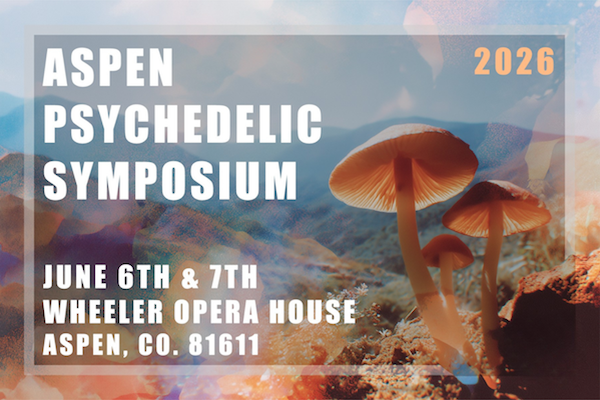
This June 6-7, join Aspen Public Radio, Healing Advocacy Fund, and the Aspen Psychedelic Resource Center for the 3rd Aspen Psychedelic Symposium. Learn more and buy tickets online.
Located at the historic Wheeler Opera House in the heart of Aspen, Colorado, this gathering brings the full spectrum of voices in psychedelic healing under one roof — pioneering researchers and clinical experts alongside clients, community practitioners, and everyday people navigating what this moment means for health and healing. This year's Symposium goes beyond individual healing to ask bigger questions: How might these discoveries reshape the systems that structure our daily lives, including healthcare institutions, research frameworks, food systems, the way we organize our communities, and even how we talk to our kids?
Don’t miss this two days of engaging, accessible programming designed to spark conversation across disciplines and lived experiences.
> Register here
IN THE NEWS
This Grandmother Saw Nowhere to Turn After a Tragic Loss. Then Came Psilocybin.
CNN
By the time Martha Stem decided she desperately needed relief from a fresh wave of anguish, she had been adding to what she calls her “trauma box” for decades. A retired appellate paralegal and grandmother in her early 70s, Stem had compartmentalized all sorts of traumatic events so that she could focus on caring for others. In her “box” were two sexual assaults while in college, pressure from loved ones to keep those incidents quiet, a suicide attempt, two divorces and other significant stressors. Packing away all these difficult experiences left her angry and depressed for much of her life.Then, during Hurricane Helene in September 2024, the box finally busted open.
> Read the full story
FDA Fast-Tracks Psychedelic Drug Research Following Trump Executive Order
CNBC
The U.S. Food and Drug Administration on Friday announced a series of measures aimed at accelerating the development of psychedelic treatments for serious mental illness. That comes after President Donald Trump signed an executive order on Saturday directing federal health agencies to expand access to emerging therapies. The move marks a significant shift toward supporting psychedelic-based medicines for conditions such as treatment-resistant depression, post-traumatic stress disorder and other substance use disorders, the FDA said.
> Read the full story
‘I Didn’t Want to Be On Medication the Rest of My Life’: Veteran Runs Psilocybin Retreats for PTSD Before FDA approval
The Guardian
After three combat deployments in Afghanistan, during which he suffered traumatic brain injuries from concussive blasts, army ranger Jesse Gould developed post-traumatic stress disorder and said he “drank almost every night to cope.” In times of hardship, veterans sometimes turn to “medication and talk therapy, but it tends to be more of a maintenance program than actually overcoming it”, Gould said, but added that at age 28, “I was still very young. I didn’t want to be on medication the rest of my life.” So, in February 2017, after hearing a podcast about ayahuasca, Gould traveled to Peru, where he tried the drug.
> Read the full story
Red Willow Hospice to Offer Psilocybin Treatment
Taos News
For thousands of New Mexicans experiencing depression, PTSD, substance use disorders, or nearing their final days of life, the well-researched medicine found in psychedelic mushrooms (psilocybin) will be a treatment option by the end of this year. Several states have decriminalized psilocybin, but New Mexico is one of only three to legalize psilocybin for psychedelic assisted therapy in a medical context. It is the only state to do so via legislation — Colorado and Oregon took it to the ballot — and the only state with built-in funding to make treatment accessible and equitable.
> Read the full story