A Big Month for Psychedelic Research
History rarely moves in straight lines, and the story of psychedelic healing is no exception. But as I reflect on where we stand today, I'm struck by how powerfully the arc of research bends toward progress.
When Albert Hofmann accidentally discovered LSD's psychoactive properties in 1943, it launched one of the most extraordinary periods in psychiatric history. By the early 1960s, over a thousand peer-reviewed papers had been published exploring psychedelics as treatments for depression, addiction, anxiety in terminal patients, and more.
Then came the crackdown. President Nixon's signing of the Controlled Substances Act in 1970 not only restricted these substances but also shelved decades of rigorous science. Federal funding dried up, institutional review boards turned away proposals, and a promising body of research became politically toxic. For nearly thirty years, this was the landscape.
Thankfully, a small number of researchers refused to let the work die over the decades, and organizations like MAPS kept the research agenda alive against enormous odds. By the early 2000s, a renaissance in research was underway. Today, the research continues at a healthy pace, and this month has been a particularly fruitful time:
A study by Johns Hopkins has found one psilocybin dose to be six times as effective as a nicotine patch at helping people quit smoking;
This pilot study from Johns Hopkins found that two sessions of psilocybin-assisted therapy produced significant, sustained improvements in symptoms, mood, and quality of life for patients with post-treatment Lyme disease;
University of Toronto researchers have found that longer preparation and integration sessions—similar to those employed for clients in state-regulated psilocybin therapy in Oregon and Colorado—produce longer antidepressant effects.
These findings represent more than scientific progress. They represent real, suffering people who might finally find relief from conditions that have, for too long, gone untreated or undertreated.
The work ahead is significant. We need policy frameworks that are as rigorous as the research, and as compassionate as the outcomes demand. That is what Healing Advocacy Fund is building. Because of your support, the arc of our work bends toward healing. Thank you for all you do.
Taylor West
Executive Director
UPDATES
Colorado: Up to Date Numbers on Natural Medicine Program Licensing
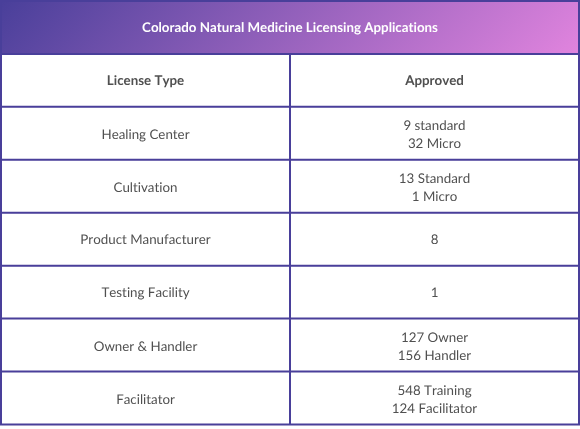
View HAF's Healing Center Directory for a list of licensed healing centers in Colorado. You can also search for facilitators using DORA's licensee lookup tool.
Oregon: Up to Date Numbers on Psilocybin Services Program Licensing

View the Oregon Psilocybin Services Data Dashboard to see the most up-to-date numbers.
Colorado: Ibogaine Bill Introduced
A bill passed out of committee this week in the Colorado Legislature would create a pilot research program to explore ibogaine as a treatment for mental health conditions and substance use disorder. The Behavioral Health Administration (BHA) would approve up to five pilot sites and help them obtain federal authorization to conduct research and identify funding opportunities. The BHA may also award grants.
Pilot site applicants would be required to seek federal approval for ibogaine research, establish a benefit-sharing plan honoring Indigenous peoples and cultures with traditional ibogaine knowledge, and submit annual efficacy data to the BHA.
The bill also makes several updates to Colorado's existing framework under the Natural Medicine Health Act (NMHA), including allowing semi-synthetic ibogaine sourcing, adding ibogaine-specific expertise to the Natural Medicine Advisory Board, and enabling regulators to adopt safety rules requiring medical prescreening and continuous monitoring. The goal is a carefully regulated, medically supervised path forward for ibogaine, starting with a federally authorized pilot and expanding to broader access under NMHA.
> Read the full bill
Colorado: Stakeholder Feedback on Colorado Natural Medicine Business Licensing
The Colorado Department of Revenue (DOR) is accepting feedback on proposed rule changes to the state's psilocybin program through April 22 and advising stakeholders to submit comments by April 10. Recommendations for rule changes may be submitted in connection with any DOR rule – they need not be limited to the currently proposed changes. HAF submitted recommendations aimed at reducing regulatory complexity and program costs, including aligning Colorado's business licensing approach more closely with Oregon's. Currently, Colorado separately licenses every entity and individual with any ownership stake in a business; Oregon simply requires a list of applicants per business licenses, which includes individuals and entities. Moving close to Oregon's approach would streamline operations and free up resources to focus on regulations that more directly affect client safety and outcomes.
> Provide comments to DOR
New Mexico: Progress Towards Program Launching
Governor Michelle Lujan Grisham has signed New Mexico’s annual budget, which includes $630,000 for a Treatment Equity Fund and $300,000 for psychedelic palliative care research at the University of New Mexico.
Full funding of the Treatment Equity Fund marks the beginning of a bold new chapter in state-led health innovation. As the nation’s first medically integrated psilocybin program, New Mexico is setting a model the rest of the country will be watching closely—particularly when it comes to affordability, access, and equity.
With the psychedelic therapy program launching on an accelerated timeline, the Legislature’s decision to fully fund the Treatment Equity Fund sends a clear message: this new model is intended to be accessible to the communities it is designed to serve. Ensuring that ability to pay is not a barrier to accessing life-saving services is essential to the program’s success.
We are grateful to the Governor and the Legislature for their leadership, and especially thank Senators Jeff Steinborn, Jay Block, Nicole Tobiassen, and Martin Hickey, and Representative Stefani Lord for their support of equity and research.
Additionally, the work of the New Mexico Psilocybin Advisory Board and the Department of Health continues, with formal rulemaking set to begin soon. The Department of Health has published draft regulations on psilocybin cultivation. Information about the proposed regulations, and the process for submitting comment, are available on the DOH website. A public hearing on the proposed rules is scheduled for April 24, 2026.
> Learn more about the public hearing
Oregon: Update on Legislative Changes to the Program
Oregon Psilocybin Services has published a new Dual Licensure and HB 2387 Fact Sheet, offering clarity on how licensed health professionals can bring their existing credentials and knowledge into the psilocybin therapy program on behalf of clients and patients. Dual licensure strengthens continuity of care by aligning psilocybin therapy with established health care practices, and gives licensed providers in other disciplines the opportunity to establish new offerings and options for existing clients who want to explore psychedelic therapy.
On the legislative front, Oregon's legislature passed HB 4040, which included several provisions advanced by Healing Advocacy Fund to bolster the state's psilocybin program framework. It expands the list of medical boards whose members can apply their skills to psilocybin preparation and integration services, adding the Oregon Occupational Therapy Board and the Oregon Board of Physical Therapy to those already recognized under HB 2387. It also establishes reciprocity for Colorado-licensed facilitators seeking licensure in Oregon's program—a significant step toward interstate alignment as the regulated psychedelic field continues to grow. Additionally, HB 4040 provides for the inclusion of low-dose data (microdose data) to be collected across the program under SB 303.
COMMUNITY SPOTLIGHT
Peter Cedergren: The Wisdom of the Medicine
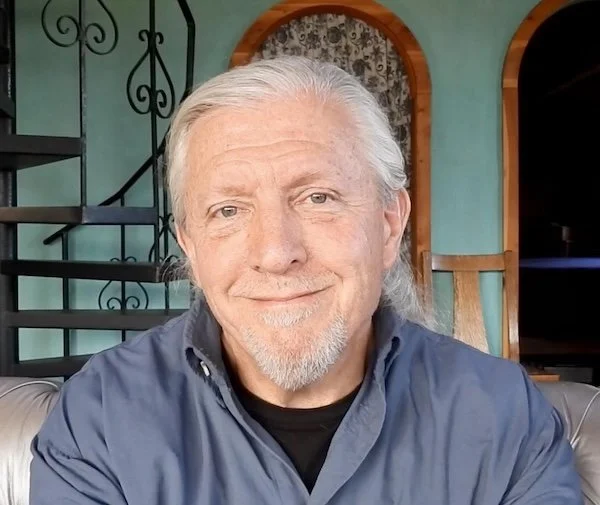
Peter Cedergren's path to psychedelic healing spans decades and disciplines — from biology and business to massage therapy and contemplative psychotherapy. He spent thirteen years leading treatment groups for men convicted of sexual offenses, developing a deep specialization in the wounds unique to men's experience. Today, Peter is licensed in Colorado as a Clinical Psilocybin Facilitator (NMIT), and he owns and operates Sacred Symbiosis Healing Center, situated in natural beauty on 5 acres in the Wet Mountains outside Westcliffe, Colorado.
As a longtime therapist, you have specialized in men’s healing work for many years. In your experience, how can psilocybin therapy facilitate men’s healing needs?
One of the concepts I work with men on is something author and educator Tony Porter calls “The Man Box.” Men have been taught they are always meant to be strong and self-reliant, to never ask for help, to hold in their worries, to always get the job done, and, most importantly, not to express emotion (and especially never to cry). This creates tremendous internal pressure, and because men are taught not to ask for help, men in this country commit suicide almost four times as often as women.
How we see the world (including those Man Box rules) is firmly entrenched in what is called the default mode network of the brain. This network is thought to create our sense of space, time, and self. Psilocin, the active compound that gets converted in our gut from psilocybin, puts the default mode network in a state of neural plasticity. It relaxes what is normally a rigid filter of how we see the world and allows us to respond in ways we have become shut off from due to our upbringing and cultural conditioning. For men, that can be an opportunity to connect with deep feelings that may have been suppressed for a long time, allowing those feelings to be accessed and most importantly, processed. This is when healing can occur.
During a session, what are some of the most common dynamics or emotional experiences you witness, and how do you respond to them in real time?
The dynamics I experience vary quite a bit, ranging from clients quietly curled up on their side while lying under a blanket for the entire session; sitting and staring at the altar where they have placed their intentions; or standing and talking to me for a couple of hours straight while in a flow state, as realizations come to them moment by moment. I listen, occasionally reflect back, and sometimes ask questions to help them further hone in on important insights.
Sometimes their session is very challenging, as they do deep processing work on issues they have never before delved into. My role is to constantly monitor them the entire time they are with me. Whenever it appears they may need something, I am there for them. They may need me to listen; for me to hold their hand or place my hand on their shoulder in a sign of support; they may need some verbal reassurance from me, being reminded to breathe and allow the Medicine to move through them; they might want assistance to walk to the restroom; they may want a drink of water. I am ever vigilant and prepared to offer them whatever support they need throughout their entire journey.
What, in your view, distinguishes psilocybin therapy from other therapeutic approaches for conditions like PTSD, anxiety, or addiction?
The main difference is how quickly and directly psilocybin works to show what needs to be revealed. From what we can see with brain scans, psilocybin causes the default mode network to go into a state of neural plasticity, which allows for deep change. Our rigidly set in place “filters” are relaxed and allowed to reset. This process also allows the participant to open themselves, make themselves more vulnerable, to what lies deeper within them.
We have been brought up in a world where the vast majority of people live life on the surface; they present a façade, a mask they wear as they go about their daily activities and interactions. This is done to stay safe, to avoid being hurt. We are so accustomed to wearing that mask that most are not even conscious it is there. The reason that talk therapy takes so much time is because the client must first learn to trust their therapist, then become aware of their mask, then be willing to lower that mask in order to see what lies beneath it. This is all a process that takes time.
Going even further in the therapy process, they need to understand the reasons they created their specific mask, then come to recognize the wounds from their upbringing that are today playing out in their daily behaviors and interactions. With psilocybin these issues can be revealed within one session. The important thing to realize is that once the issues are seen and understood, then it is up to the client to do their work; to embody the lessons and implement the changes as they move forward in their life.
Can you speak to what motivated you to open this specific healing sanctuary near a small town in the Wet Mountains of Colorado, and how the location itself contributes to the therapeutic experience?
My goal was to have a location where the client could travel to a remote, wilderness location; leaving behind the stress, fast pace and congestion of urban life. The trip to the healing center is itself a metaphor for the journey the client is preparing to take within themselves. We are located 17 miles outside of the town of Westcliffe; in a small, quiet, peaceful community that was the first Colorado town designated as a “Dark Sky Community.” The cabin itself is rustic and it gives one the sense of going back to an unfettered place and time—a simpler time where you can set aside your concerns.
EVENTS
Psycon Psychedelic Convention is April 10–11 in Denver
The psychedelic renaissance is bringing profound healing to tens of thousands—and with it, questions about safety, accountability, and protection from harm. At Psycon 2026 in Denver, HAF is partnering with Mental Health Colorado for a timely and important panel discussion. Experts from law enforcement, emergency Medicine, and advocacy will tackle these and other questions: What separates legitimate, regulated care from predatory practice? What drives psychedelic-related emergencies, and how do we prevent them? How do we build a culture of harm reduction that protects everyone?
Joining the conversation are Lt. Daric Gutzwiller of the Summit County Sheriff's Office; Dr. Case Newsom, Medical Director of the Zendo Project and Stadium Medical; and HAF Colorado Director Tasia Poinsatte, with Vincent Atchity, President & CEO of Mental Health Colorado, moderating. Come ready to engage with one of the most important and current conversations happening in the psychedelic space.
> Get your ticket
IN THE NEWS
A Dose of Psilocybin Helps Smokers Quit in New Study
NPR
The long-running campaign against smoking could find reinforcements from the new wave of research into psychedelics. Though much of the attention around psychedelics has focused on depression and other mental health conditions, researchers believe these substances also hold the potential to transform addiction treatment. A new study makes the strongest case yet for a psychedelic drug's impact on smoking, which remains the leading cause of preventable death in the U.S.
> Read the full story
Denver’s First Microdosing Cafe Now Offering Psilocybin-Assisted Yoga, Art and More
Denver Post
Vivid Minds is Colorado’s first licensed microdosing cafe, offering adults 21-and-up opportunities to learn about psilocybin mushrooms and experience them legally. Earlier this month, the business hosted its first psychedelic session during which guests consumed a small dose of “magic mushrooms” and participated in a yoga class and sound bath. Soon, it will roll out more experiential group classes that can be elevated with a microdose. Vivid Minds joins the state’s nascent healing center industry, which is designed to make psilocybin, a federally scheduled substance, available for therapeutic purposes.
> Read the full story
Treatment Equity Fund Expected to Widen Psilocybin Program Access for Low-Income, Rural New Mexicans
Source New Mexico
New Mexico is setting up the statewide medical psilocybin program to be more accessible to patients later this year with the creation of a treatment equity fund, which was signed into law last week.
> Read the full story
New Mexico Will Fund Psychedelic Treatment for Patients on Low Incomes
Filter Magazine
On March 11, New Mexico Governor Michelle Lujan Grisham (D) signed the budget for the upcoming fiscal year into law, and in doing so, underlined the state’s position at the vanguard of alternative mental health treatments.
> Read the full story
An In-Depth Look at the Bipartisan Push for an Ibogaine Research Pilot Program in Colorado
Denver 7
Colorado lawmakers are considering a proposal to research a powerful psychedelic plant medicine with the ability to "reset" the brain and combat addiction or mental health issues.
> Watch the full story